Choosing between an electric and manual pallet jack can have a significant impact on warehouse productivity, operator comfort, material handling efficiency, and long-term equipment costs. While both types of pallet jacks are designed to transport palletized loads, they differ in how they operate, the physical effort required from workers, and the applications where they perform best.
A manual pallet jack uses a hydraulic lifting mechanism and relies on the operator to push or pull the load. Electric and battery-powered pallet handling equipment uses powered components to reduce some of that manual effort. When making an electric pallet jack vs manual pallet jack comparison, businesses should consider load weight, travel distance, frequency of use, maintenance requirements, facility layout, and budget.
Understanding these differences can help warehouses, manufacturing facilities, distribution centers, and other industrial operations select equipment that supports safer and more efficient material movement.
What Is an Electric Pallet Jack and How Does It Work?
An electric pallet jack uses battery power to assist with lifting, travel, or both, depending on the equipment design. Powered pallet handling equipment can reduce the amount of physical force required from operators, making it particularly useful when pallets are moved repeatedly or materials must travel longer distances throughout a facility.
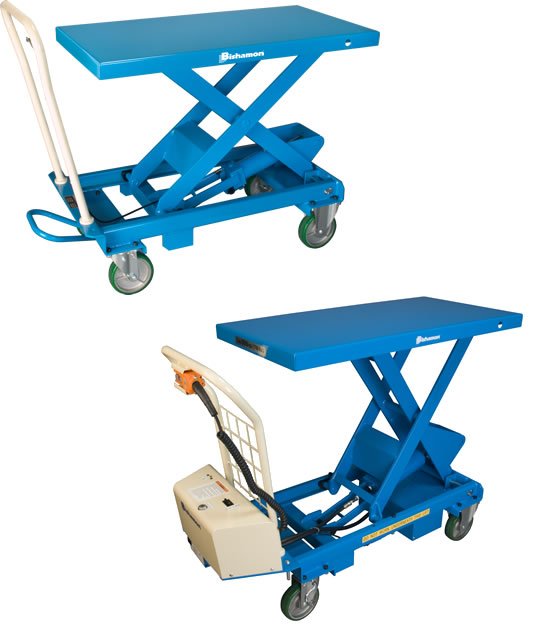
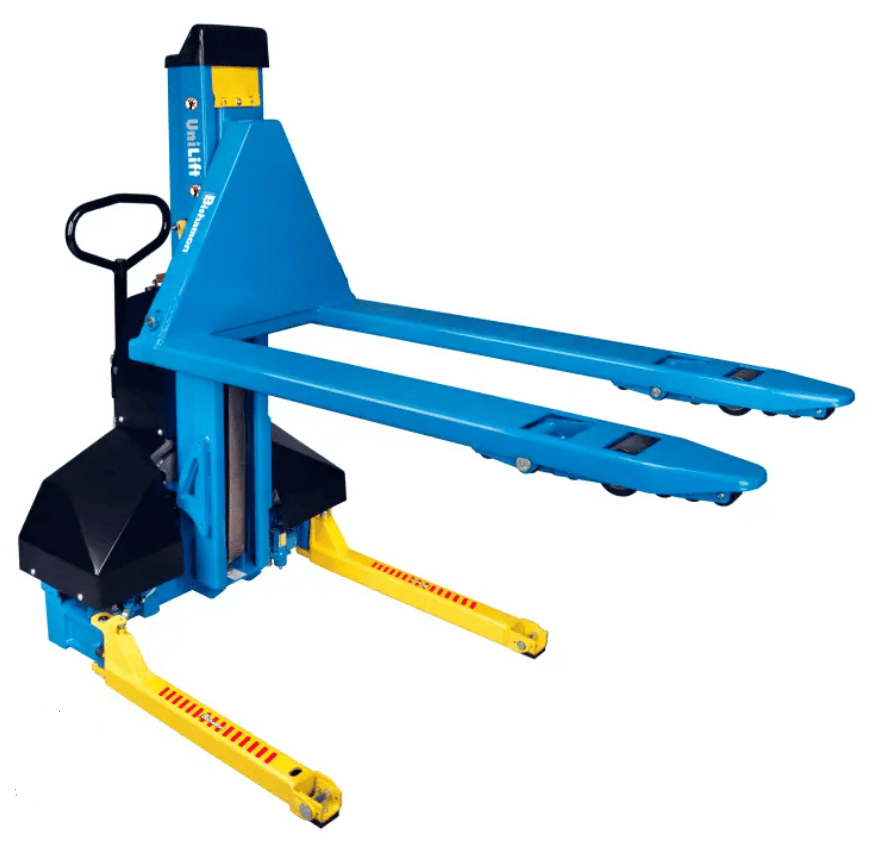
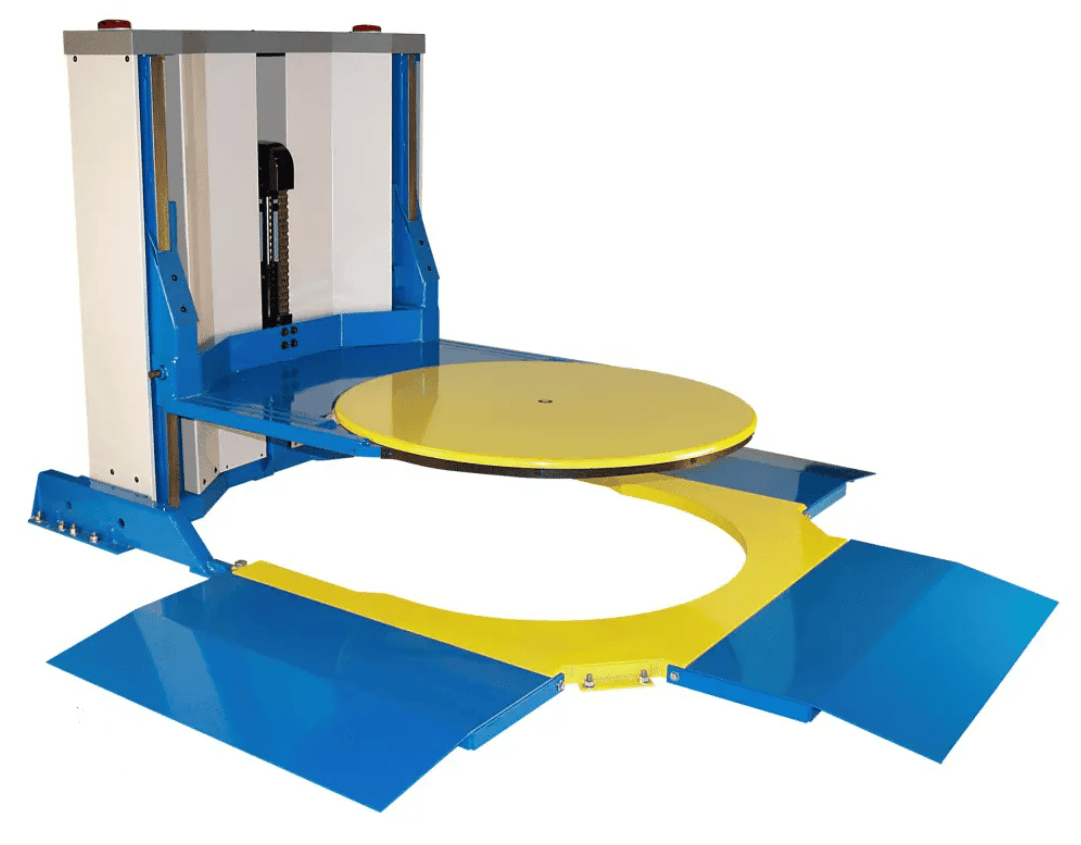
Some powered pallet handlers also provide capabilities beyond basic floor-level transportation. Bishamon’s UniLift™ pallet transporter and work positioner, for example, combines pallet transportation with battery-powered electric-hydraulic lifting. It can move compatible palletized loads and then raise them to a more comfortable working height for loading, unloading, assembly, staging, and other repetitive tasks.
Before deciding to buy an electric pallet jack or another battery-powered pallet handling solution, businesses should consider how frequently the equipment will operate, the distance materials travel, charging requirements, pallet compatibility, load capacity, and whether elevated positioning is needed.
What Is a Manual Pallet Jack and How Is It Used?
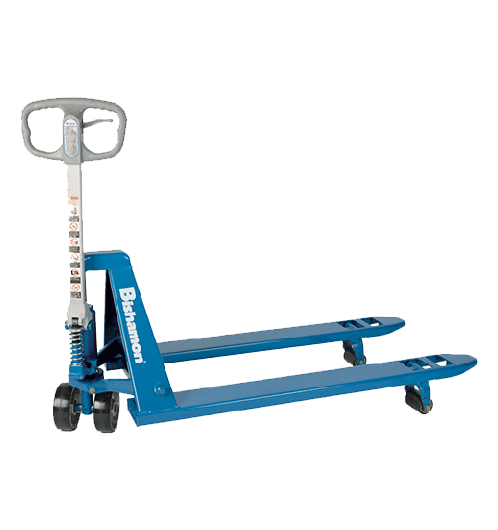
A manual pallet jack, also known as a hand pallet truck, provides a simple way to move palletized materials across smooth, level surfaces. The operator places the forks beneath a compatible pallet and pumps the handle to activate the hydraulic lifting mechanism. Once the pallet clears the floor, the operator manually pushes or pulls the load to its destination.
Manual pallet trucks remain common throughout warehouses, manufacturing facilities, loading areas, stockrooms, and distribution centers because they require no battery or charging infrastructure and are relatively straightforward to operate and maintain.
Bishamon’s Blue Label™ BS Series hand pallet trucks are available in multiple capacities, fork dimensions, and configurations for different material handling requirements. Businesses should compare load weight as well as standard pallet jack dimensions when choosing equipment for specific pallets and workspaces.
Electric vs. Manual Pallet Jacks: Key Differences to Know
The primary difference between electric and manual pallet jacks is how much physical effort the operator must provide. Manual pallet trucks depend on the worker to move the equipment, while powered models can reduce the effort required for repetitive lifting or transportation.
Manual pallet jacks generally offer a lower initial cost, simpler maintenance, and greater flexibility because they do not need to be charged. They can be a practical choice when pallets are moved relatively short distances or equipment use is intermittent.
Electric pallet handling equipment typically requires a larger initial investment but can reduce operator effort and support more demanding workflows. In facilities where employees handle palletized materials throughout an entire shift, powered operation may improve efficiency and reduce fatigue.
A complete pallet jack comparison should therefore consider how the equipment will actually be used rather than selecting a model based on purchase price or power source alone.
Pros & Cons of Electric Pallet Jacks
Electric pallet jacks and other battery-powered pallet handlers can provide significant advantages for busy material handling environments. Powered movement or lifting reduces the physical effort required from workers and can improve productivity when loads need to be handled repeatedly throughout the day.
Electric equipment may be especially beneficial in larger facilities, high-volume warehouses, production environments, and applications involving longer travel distances. Specialized powered equipment can also raise materials beyond basic transportation height, helping create a more ergonomic workstation.
The tradeoff is additional equipment complexity. Batteries need to be charged and maintained, electrical and mechanical components require inspection, and powered equipment generally carries a higher upfront cost. Businesses should consider these long-term requirements when comparing electric options.
Pros & Cons of Manual Pallet Jacks
Manual pallet jacks remain one of the most practical choices for everyday pallet transport. They require no charging equipment or electrical infrastructure, can be deployed throughout a facility, and generally have a lower upfront cost than powered alternatives.
Their straightforward design also makes them well suited for smaller warehouses, intermittent pallet movement, loading areas, and operations where loads only need to travel short distances.
The primary disadvantage is operator effort. Workers must manually push or pull the equipment, and repeatedly moving heavy palletized loads can increase fatigue. If employees move pallets continuously throughout the day or across significant distances, powered equipment may provide a more efficient alternative.
Facilities evaluating manual equipment can review Bishamon’s guide explaining how much weight a pallet jack can lift before choosing a model.
Comparing electric and manual pallet jacks cost
Manual pallet jacks typically cost less upfront because they have fewer powered components and do not require batteries or charging equipment. This can make them an economical option for facilities with moderate or occasional pallet handling needs.
Electric pallet jacks typically require a larger initial investment, along with consideration for charging, battery maintenance, replacement components, and potential downtime. However, purchase price should not be the only factor considered.
For high-volume facilities, reducing the time and physical effort required to move pallets can provide meaningful operational value. Businesses should consider total cost of ownership alongside labor requirements, frequency of use, travel distance, maintenance, and anticipated equipment life.
Choosing the best pallet jack for small businesses
For many small businesses, a manual pallet jack provides an effective balance of cost, simplicity, and functionality. If employees only move a limited number of pallets across short distances, powered equipment may provide capabilities the operation does not regularly need.
However, company size alone should not determine the decision. A small manufacturing facility or warehouse can still have a demanding pallet handling workflow. If workers repeatedly move heavy loads, battery-powered equipment may improve efficiency and reduce physical demands.
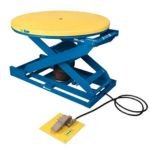
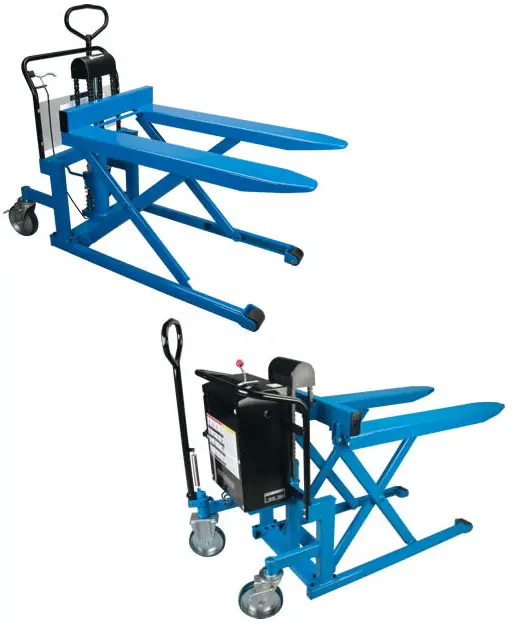
Businesses should evaluate daily pallet volume, load weight, available floor space, travel distance, pallet dimensions, and lift requirements before selecting equipment. If materials need to be raised substantially higher than floor-transport height, Bishamon’s high-lift pallet jacks provide additional work-positioning capabilities.
Electric pallet jacks vs manual: which is safer?
Both electric and manual pallet jacks can support safe material handling when they are correctly selected, maintained, and operated according to manufacturer instructions.
Powered equipment can reduce the physical force operators need to apply when moving loads, particularly during repetitive applications. At the same time, powered travel introduces additional considerations related to speed, stopping distance, pedestrian traffic, equipment controls, and operator training.
Manual pallet jacks move according to operator effort but still require careful handling. Heavy loads, unstable pallets, poor floor conditions, excessive speed, or improper pushing and pulling techniques can create hazards.
Regardless of equipment type, operators should stay within rated load capacities, inspect equipment before use, maintain clear visibility, keep loads stable, and follow applicable operating and safety instructions.
Pallet jack differences for indoor and outdoor use
Pallet jacks are commonly used indoors on smooth warehouse, production, shipping, and distribution center floors. These surfaces generally provide the predictable conditions needed for efficient pallet movement.
Manual pallet trucks can be especially convenient indoors because they do not require charging stations and can be moved between different areas as needed. Powered equipment is also valuable indoors, especially in larger facilities where operators cover greater distances.
Outdoor applications require additional consideration. Uneven pavement, slopes, debris, moisture, thresholds, and deteriorated surfaces can affect stability and maneuverability. Businesses should never assume a conventional warehouse pallet jack is appropriate for rough outdoor terrain unless the equipment manufacturer specifically approves that application.
Advantages of Bishamon electric pallet jacks for efficiency
Bishamon offers powered pallet handling equipment for operations that need more than basic floor-level transportation. The UniLift™ pallet transporter and work positioner combines pallet movement with electric-hydraulic lifting, allowing compatible palletized loads to be transported and elevated using one piece of equipment.
By raising materials closer to a comfortable working height, UniLift™ can support repetitive loading, unloading, assembly, staging, and production applications while helping reduce unnecessary bending and reaching.
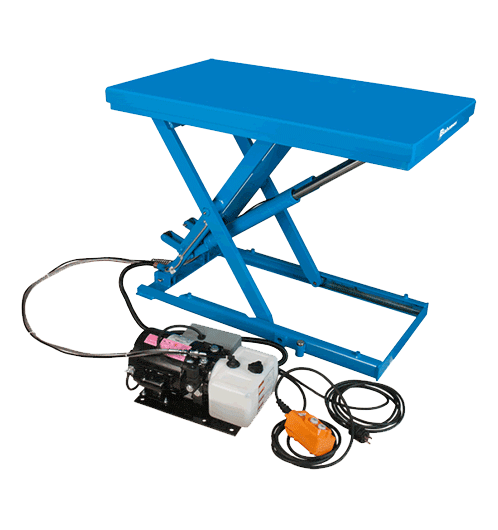
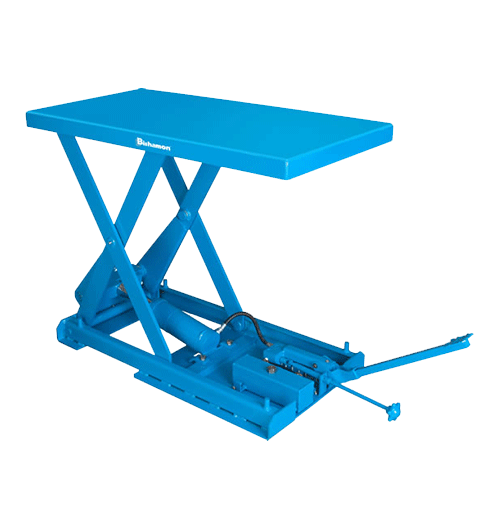
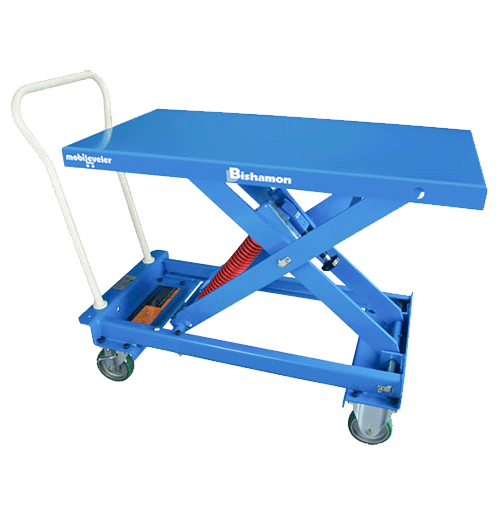
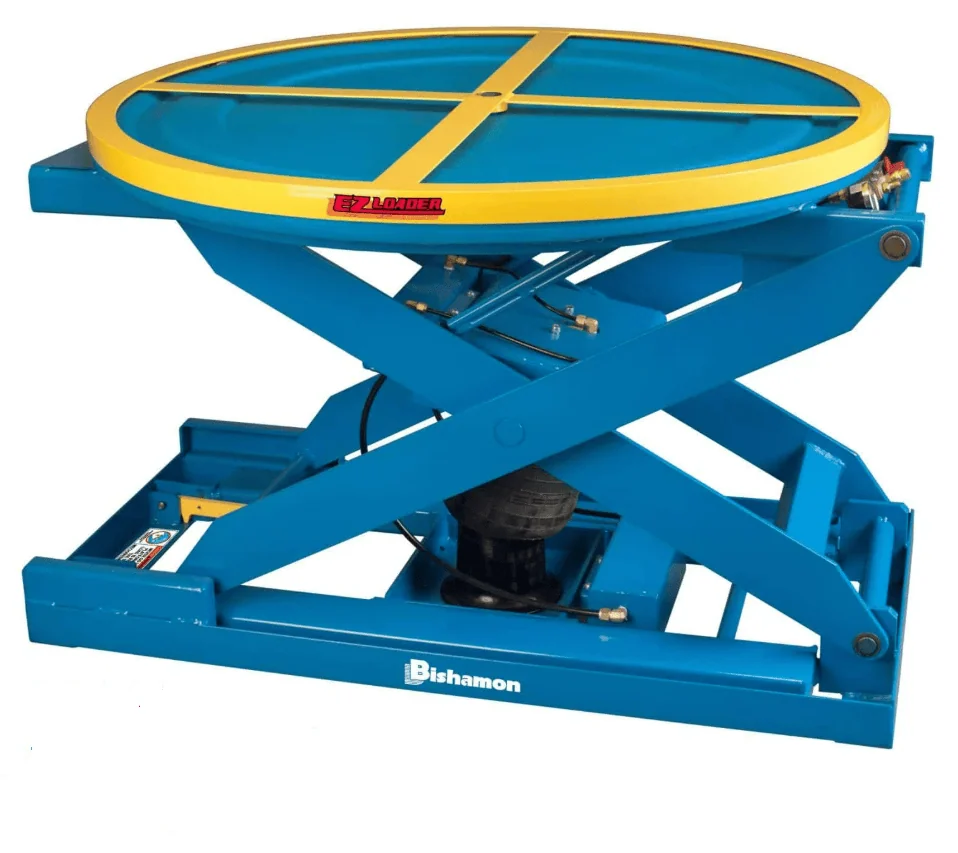
For applications that only require traditional pallet movement, Bishamon’s Blue Label™ manual pallet trucks provide a durable manual alternative. Facilities can also explore Bishamon’s complete selection of skid lifts and pallet trucks to compare equipment based on load capacity, pallet compatibility, lift requirements, and operating environment.
Conclusion
The right choice in an electric pallet jack vs manual pallet jack comparison depends on how materials move through your facility. Manual pallet jacks provide a simple, cost-effective solution for shorter travel distances and intermittent pallet movement, while electric and battery-powered equipment can reduce operator effort and improve efficiency in more demanding applications.
Before choosing equipment, consider load weight, pallet dimensions, travel distance, frequency of use, maintenance requirements, available charging infrastructure, and whether loads need to be elevated beyond basic transport height.
Bishamon offers pallet trucks, high-lift pallet jacks, skid lifts, and powered pallet positioning equipment designed for a wide variety of warehouse and industrial material handling applications.
Explore Bishamon’s skid lifts and pallet trucks to find a solution that fits your facility’s specific workflow and ergonomic requirements.