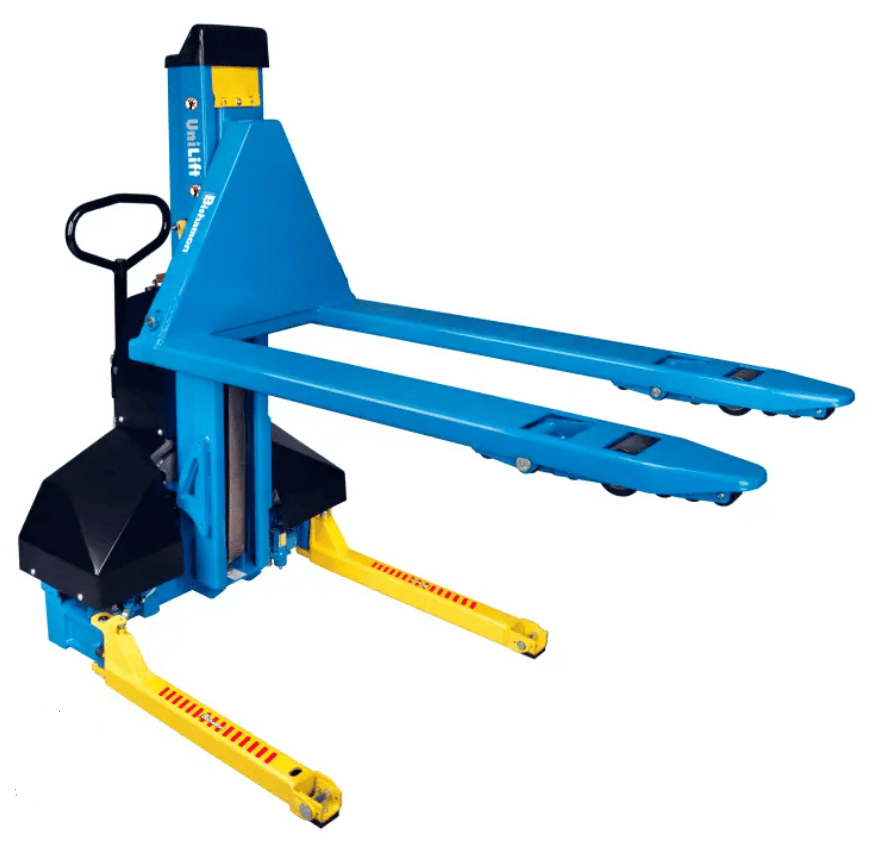
Pallet jacks are built for demanding material handling environments, but regular use can eventually lead to problems with lifting, lowering, steering, wheels, or hydraulic performance. Knowing how to identify common issues can help facilities reduce downtime, protect equipment, and determine whether a simple adjustment or professional pallet jack repair is needed.
Before attempting any pallet jack troubleshooting, remove the load, move the equipment to a safe and level area, and consult the manufacturer’s service instructions. Hydraulic, structural, or load-bearing repairs should be completed by trained personnel when necessary.
Routine inspection and proper pallet jack maintenance can also help prevent many common problems before they interfere with warehouse operations. Bishamon owners can access product information, service manuals, and other documentation through the Bishamon resource library.
What Are the Most Common Pallet Jack Issues?
Some of the most common pallet jack problems involve the hydraulic lifting system, wheels, forks, handle controls, and moving components. Operators may notice that the pallet jack will not lift, does not reach its normal height, slowly lowers under a load, becomes difficult to steer, or does not roll as smoothly as it once did.
Wear can develop faster when equipment is frequently overloaded, operated across damaged floors, exposed to debris, or used without routine inspection. Hydraulic fluid leaks, damaged seals, worn wheels, bent components, and improperly adjusted controls can all affect performance.
Using the correct equipment for the load is equally important. Review the manufacturer’s rated capacity before operation, and learn more about how much weight a pallet jack can lift to avoid unnecessary stress on the hydraulic system, wheels, and frame.
How to Diagnose Problems with a Pallet Jack
Effective pallet jack troubleshooting begins by identifying exactly what the equipment is doing differently.
Start with a visual inspection. Check the forks for visible damage, inspect the wheels and rollers for excessive wear or debris, look around the hydraulic pump for signs of leaking fluid, and verify that the handle and control lever move normally.
Next, test the pallet jack without a load. Raise and lower the forks several times while watching for unusual movement, noise, resistance, or fluid leakage. If the jack operates normally unloaded but struggles under weight, confirm that the load falls within the equipment’s rated capacity.
Do not continue operating a pallet jack if you identify structural damage, a significant hydraulic leak, unstable lifting, or another condition that could affect safe operation.
How to Fix a Pallet Jack Hydraulic Pump That Won’t Lift
When a hydraulic pallet jack will not lift, the problem may involve the control mechanism, hydraulic fluid level, trapped air, seals, valves, or another component within the pump assembly.
Begin by confirming that the lowering control has returned to the proper lifting position. If the release mechanism remains partially engaged, the hydraulic system may be unable to build enough pressure to raise the forks.
Low hydraulic fluid, air within the system, or worn hydraulic components can also interfere with lifting. The proper diagnostic and repair procedure varies by model, so anyone attempting to fix a hydraulic pallet jack should follow the service manual for that specific equipment.
Avoid opening or disassembling pressurized hydraulic components without appropriate training. Businesses that need professional assistance with a Bishamon unit can use the Bishamon service locator to find service support.
What causes hydraulic leaks in a pallet jack
Hydraulic leaks can develop when seals, fittings, hoses, pump components, or other parts become worn or damaged. Heavy use, contamination, age, improper maintenance, and repeated overloading may contribute to premature wear.
Even a small leak should be investigated rather than simply wiping away the fluid and returning the jack to service. Loss of hydraulic fluid can eventually reduce lifting performance, while a damaged seal or component may continue to deteriorate.
If a Bishamon pallet truck requires a replacement seal, pump component, wheel, or other part, operators can search the Bishamon replacement parts catalog for equipment-specific components.
How to adjust the height of pallet jack forks
A standard pallet jack is designed to operate within a predetermined lowered and raised fork range. Maximum and minimum fork heights are generally determined by the equipment design rather than adjusted by operators as a routine preference.
If the forks no longer reach their expected height or fail to lower completely, the issue may involve the hydraulic system, linkage, control adjustment, wheels, or another component that requires inspection.
Businesses needing a different fork height or width should choose equipment designed for their application rather than modifying an existing pallet truck. For example, an adjustable fork pallet jack or specialized pallet handling solution may accommodate different load configurations. Bishamon’s guide to standard pallet jack dimensions explains how fork width, length, and height can vary by equipment type.
What to Do If a Pallet Jack Won’t Lift Fully
If a pallet jack begins lifting but stops before reaching its normal maximum height, first remove the load and test the equipment unloaded. Confirm that the jack is not being used beyond its rated capacity and inspect it for leaks or visible damage.
Incomplete lifting can sometimes be associated with insufficient hydraulic fluid, air in the hydraulic system, worn seals, improper control adjustment, or pump-related issues.
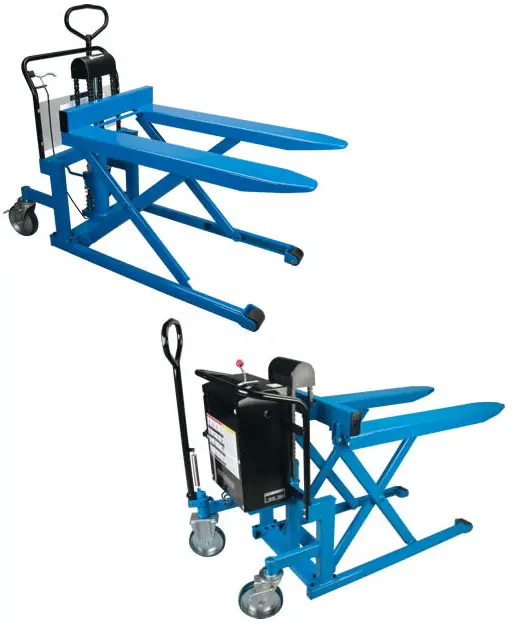
The expected height also depends on the pallet jack design. Standard pallet trucks only need enough elevation to clear the floor, while high-lift equipment is designed for greater vertical positioning. Learn more about how high a pallet jack can lift before assuming the equipment is failing to reach its intended height.
How to properly maintain a pallet jack for longer use
Consistent pallet jack maintenance can help extend equipment life and reduce unexpected repairs. Operators should routinely inspect wheels, forks, handles, hydraulic components, fasteners, and other high-wear areas.
Keep the equipment clean and remove string, shrink wrap, dirt, and other debris that can collect around wheels and axles. Check for hydraulic leakage and unusual noises, and address changes in steering, rolling, lifting, or lowering performance before they become more serious.
Businesses should also avoid exceeding rated capacity or using equipment on surfaces for which it was not designed. Following the manufacturer’s recommended inspection and maintenance schedule is one of the best ways to preserve reliable pallet truck performance.
Why won’t my pallet jack wheels move smoothly?
Pallet jack wheels can become difficult to roll because of debris, wheel damage, bearing wear, uneven flooring, or excessive loading.
Warehouse materials such as plastic wrap, banding, string, and other debris can become wrapped around load rollers and steering wheels. Regular cleaning can prevent these materials from restricting wheel movement.
Inspect wheels for flat spots, cracks, excessive wear, and other damage. A pallet jack that suddenly becomes difficult to maneuver should be inspected before continued use, especially if steering performance has changed significantly.
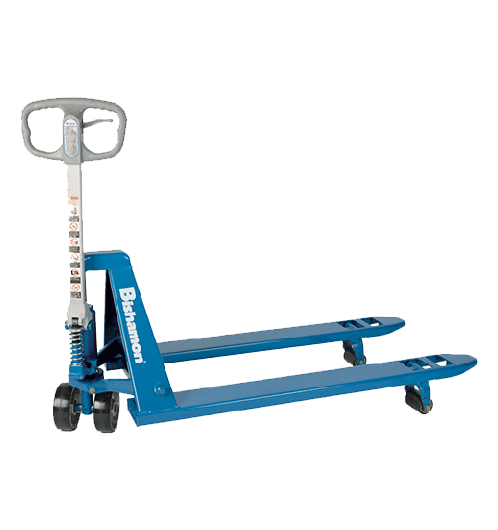
For businesses replacing an older or heavily worn unit, Bishamon’s Blue Label™ hand pallet trucks provide multiple configurations for warehouse and industrial pallet transport.
Basic troubleshooting guide for pallet jack repairs
When performing basic pallet jack troubleshooting, start with the simplest possible causes. Confirm that the load is within capacity, inspect the floor and wheels, check the operating controls, look for hydraulic leaks, and test raising and lowering without a load.
Next, consult the service documentation for the specific pallet jack model. Maintenance and repair procedures can vary considerably between manufacturers and equipment designs, so generic repair instructions should never override the manufacturer’s guidance.
Minor issues such as debris around a wheel may be straightforward to correct. Hydraulic leaks, damaged forks, failing pumps, structural problems, or malfunctioning load-bearing components should generally be addressed with the appropriate replacement parts and qualified service support.
Signs of a hydraulic issue in a pallet jack
Common signs of a hydraulic problem include difficulty raising the forks, incomplete lifting, gradual lowering, inconsistent movement, visible fluid leakage, or a sudden change in the effort required to pump the handle.
A pallet jack that repeatedly loses height after being raised should be removed from normal operation until the cause is identified. Continuing to use malfunctioning hydraulic equipment can worsen component damage and create unnecessary risks during material handling.
For Bishamon pallet jack repair, use the appropriate Bishamon service documentation and replacement parts for the specific model rather than substituting components that have not been designed for the equipment.
Why my pallet jack won’t go up or down properly
When a pallet jack will not go up or down properly, the cause may involve the handle control, release mechanism, linkage, hydraulic system, or damaged internal components.
If the forks will not rise, inspect the controls and hydraulic system. If they rise but will not lower, the lowering mechanism or linkage may require adjustment or service. If movement is uneven or unpredictable in either direction, stop using the equipment until it has been inspected.
Never force a loaded pallet jack to lower or attempt repairs underneath raised forks. Remove the unit from service and obtain qualified assistance when the problem cannot be safely identified through routine inspection.
Where to Find High-Quality Replacement Parts for Pallet Jacks
Using the correct replacement components is important for maintaining pallet jack reliability, fit, and performance. Wheels, rollers, pump components, handle parts, seals, hardware, and other items should be matched to the correct equipment model and serial number whenever applicable.
Bishamon provides an online replacement parts store for customers searching for compatible components. Owners can also use Bishamon’s manuals and equipment resources to locate service information or find an authorized service center when professional repair is required.
Conclusion
Knowing how to recognize common pallet jack problems can help warehouses address minor issues early and avoid unnecessary equipment downtime. Routine inspection, proper loading, clean wheels, correctly functioning controls, and regular hydraulic system maintenance all contribute to dependable performance.
When a pallet jack develops persistent lifting problems, hydraulic leaks, damaged wheels, or structural issues, use manufacturer-approved service information and replacement parts rather than continuing to operate malfunctioning equipment.
Bishamon offers skid lifts and pallet trucks, replacement parts, equipment resources, and service support for demanding material handling environments. Whether maintaining an existing unit or replacing equipment that has reached the end of its service life, selecting and properly maintaining the right pallet handling equipment can help support safer, smoother, and more productive warehouse operations.