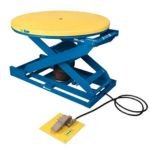
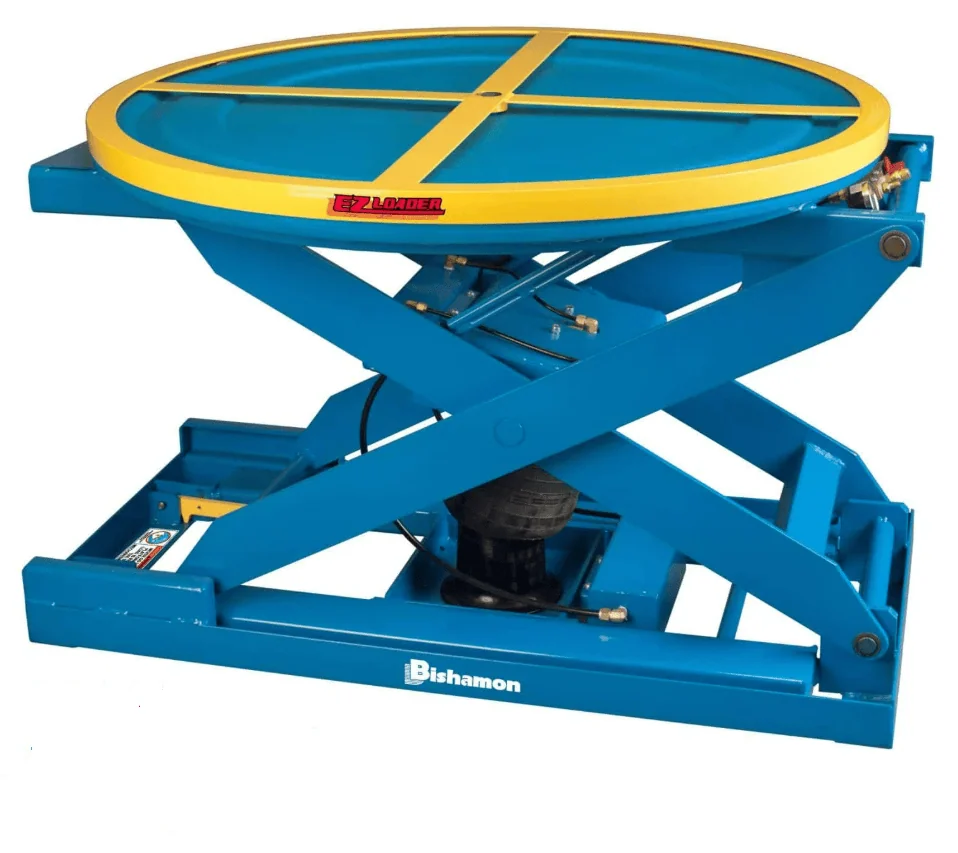
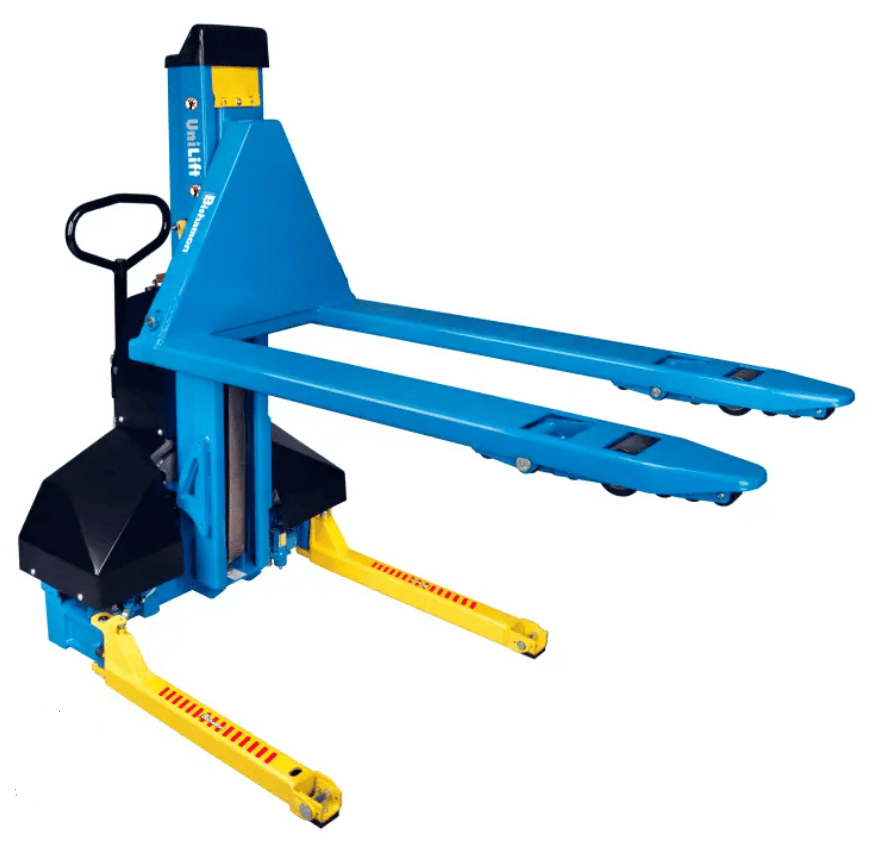
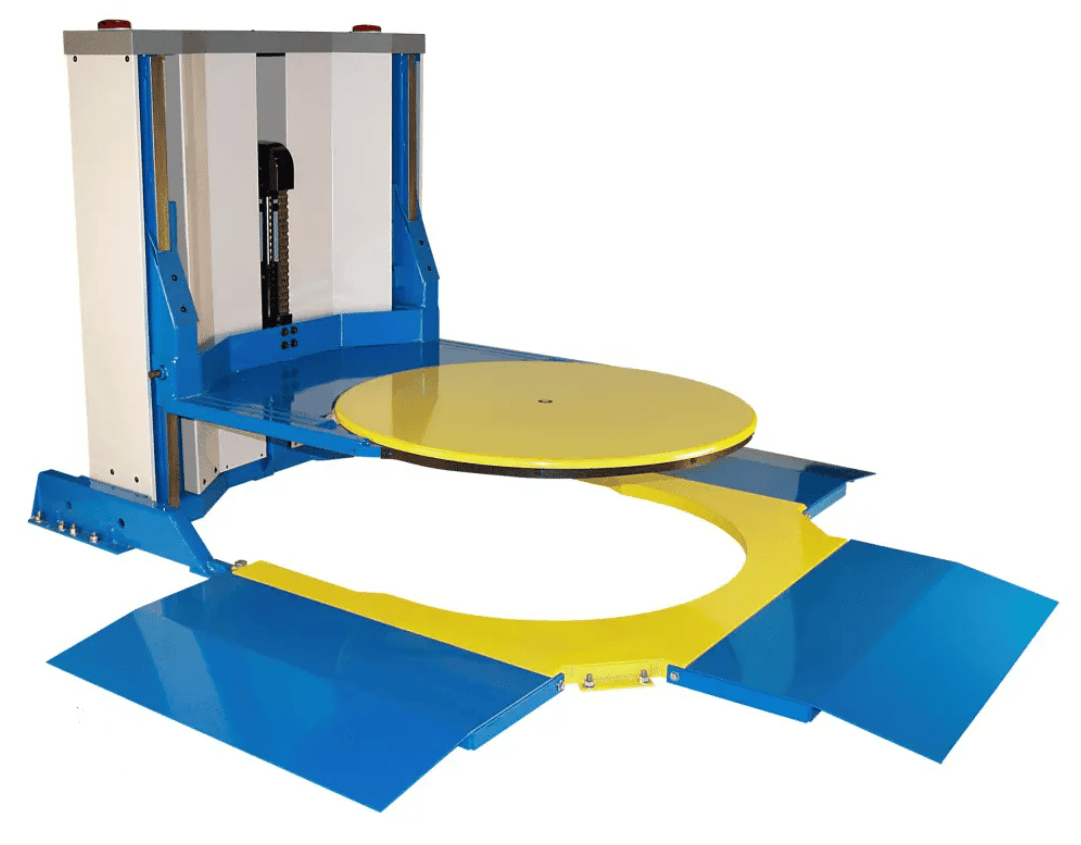
When selecting an industrial hydraulic lift table for heavy-duty applications, load capacity, lift height, platform size, safety features, and long-term reliability should all be carefully evaluated. The right hydraulic scissor lift table can improve material handling efficiency, reduce repetitive lifting and bending, and help workers position heavy materials at a safer, more comfortable working height.
Industrial scissor lift tables are widely used in warehouses, manufacturing facilities, assembly areas, packaging lines, maintenance departments, and distribution centers. Available in multiple capacities and configurations, Bishamon hydraulic lift tables support applications ranging from workstation positioning and pallet handling to machinery loading and heavy material staging.
Why Hydraulic Scissor Lifts Are Essential for Heavy-Duty Use
Hydraulic scissor lifts use hydraulic pressure to raise and lower a stable platform with smooth, controlled vertical movement. This design makes them well suited for repetitive industrial lifting applications where workers need dependable access to heavy parts, equipment, containers, or palletized materials.
By bringing materials closer to the operator, an industrial lift table can reduce manual lifting, bending, stretching, and overreaching. This helps improve workstation ergonomics while supporting more consistent assembly, inspection, packaging, machine feeding, and load-transfer workflows.
Hydraulic scissor lift tables are also valued for their rugged construction and ability to accommodate a wide range of load sizes. Facilities can select stationary, low-profile, compact, mobile, or customized lift tables based on their available floor space and operational requirements.
What to Look for in a Heavy-Duty Hydraulic Lift Table
The best hydraulic lift table for an application is one that safely matches the load, workspace, and frequency of use. Important factors to evaluate include:
- Rated load capacity: The table must support the maximum anticipated load without exceeding its published rating.
- Platform dimensions: The load should fit securely on the platform without excessive overhang.
- Raised and lowered heights: Confirm that the table can reach the required working height while fitting beneath the loading equipment or material.
- Lift cycle and frequency: Repetitive production environments may require equipment designed for more frequent operation.
- Construction quality: Heavy-gauge steel frames, reinforced platforms, and durable scissor mechanisms support reliable industrial use.
- Operating controls: Foot controls, hand pendants, and other control options should fit the workstation and task.
- Mobility requirements: Stationary tables provide a fixed lifting station, while mobile models can move materials between work areas.
- Loading method: Some applications require low-profile access for pallet trucks, carts, or wheeled containers.
Bishamon’s complete range of industrial lift tables includes models for compact workstations, floor-level loading, mobile handling, and heavy-duty production environments.
Choosing the Right Hydraulic Lift Table Capacity
Load capacity is one of the most important considerations when choosing a hydraulic lift table. Start by determining the maximum combined weight of the materials, pallets, containers, fixtures, and other equipment that may be placed on the platform.
Select a table rated to safely support the heaviest anticipated load. The weight should also be centered and distributed according to the manufacturer’s specifications, since uneven or off-center loads can affect stability and lifting performance.
Facilities should avoid choosing a model based only on the average load weight. Accounting for heavier future loads and changing production requirements can help prevent equipment overloading and provide greater flexibility as operations evolve.
Safety Features in Industrial Hydraulic Scissor Lifts
Safety features vary by model and application, but heavy-duty hydraulic lift tables may include:
- Overload protection
- Emergency-stop controls
- Pressure-relief systems
- Mechanical maintenance supports
- Captured or entrapped scissor rollers
- Perimeter toe protection
- Non-slip platform surfaces
- Controlled lowering systems
- Guardrails or gates for applicable configurations
Safety features do not replace proper equipment selection, operator training, inspection, and maintenance. Workers should follow the product manual, keep clear of the scissor mechanism and platform edges, and never exceed the rated load capacity.
How Hydraulic Scissor Lifts Improve Workplace Ergonomics
Industrial scissor lift tables help reduce the physical demands associated with repeatedly lifting materials from the floor or reaching into deep containers. Operators can raise or lower the platform as the task changes, keeping materials within a more accessible working range.
Improved load positioning can support safer and more efficient:
- Assembly and production work
- Pallet loading and unloading
- Parts picking and placement
- Packaging and inspection
- Machine feeding
- Repair and maintenance
- Material staging and transfer
By reducing unnecessary manual repositioning, hydraulic lift tables can also help facilities create more consistent workflows and make better use of available labor.
Bishamon LoProfile® Lift Tables for Floor-Level Loading
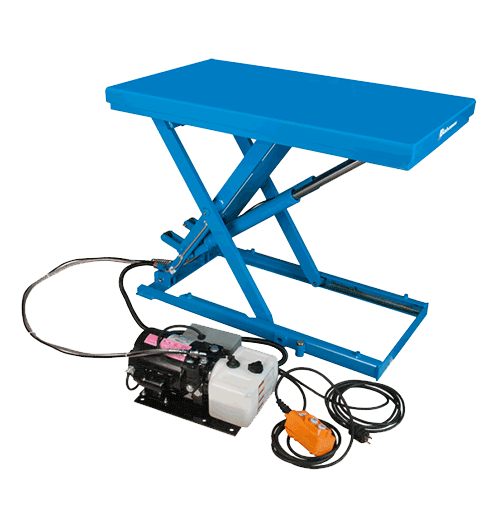
The LoProfile® Series is designed for applications requiring a low collapsed height and easier access with pallet trucks, carts, and other wheeled equipment. Available configurations support loads up to 4,400 pounds and provide electro-hydraulic lifting for demanding industrial tasks.
LoProfile® lift tables feature durable steel construction, captured scissor rollers, and an electronic perimeter toe guard designed to stop downward movement when an obstruction is detected. Their low platform height makes them particularly useful for pallet handling, cart loading, machinery positioning, and material transfer applications where a traditional-height table may be difficult to load.
How to Choose the Right Lift Height
The required lift height depends on the starting position of the load and the height needed for the task. Evaluate both the table’s collapsed height and maximum raised height before choosing a model.
The ideal working range should allow employees to access materials without excessive bending, reaching, or lifting. Facilities should also consider:
- Operator height and task requirements
- Adjacent conveyors or machinery
- Loading-dock or workstation elevations
- Ceiling clearance
- Overhead equipment
- Pallet and product height
- Required transfer points
A double-scissor design may be appropriate when greater vertical travel is needed, while a low-profile model may be preferable when materials must be loaded near floor level.
Additional Bishamon Industrial Lift Table Options
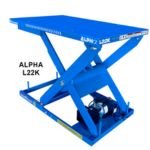
Bishamon offers several hydraulic scissor lift table series for different operating environments. The ALPHA® Series provides rugged stationary lifting for industrial workstations, assembly lines, and production applications.
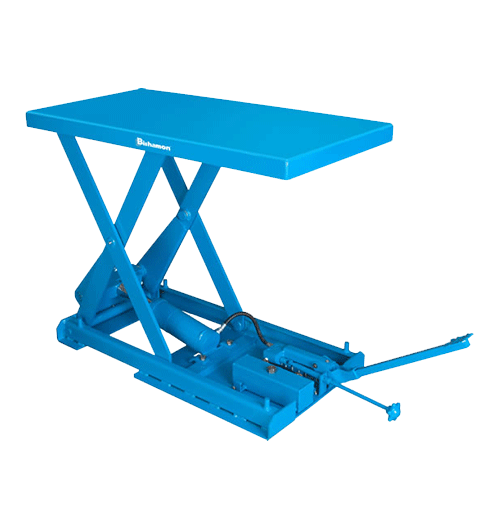
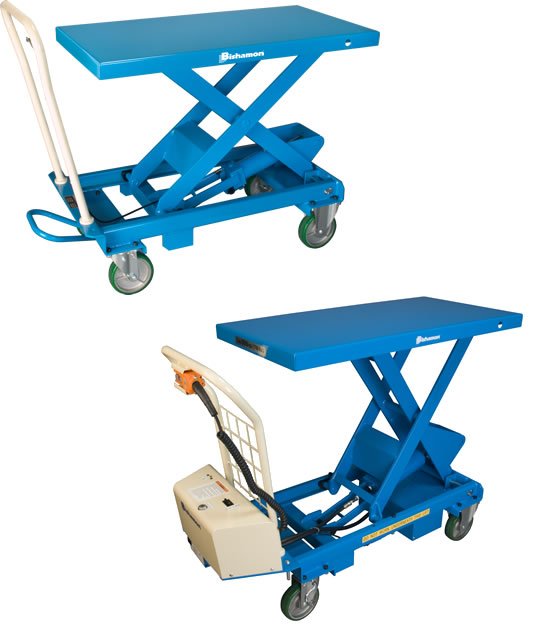
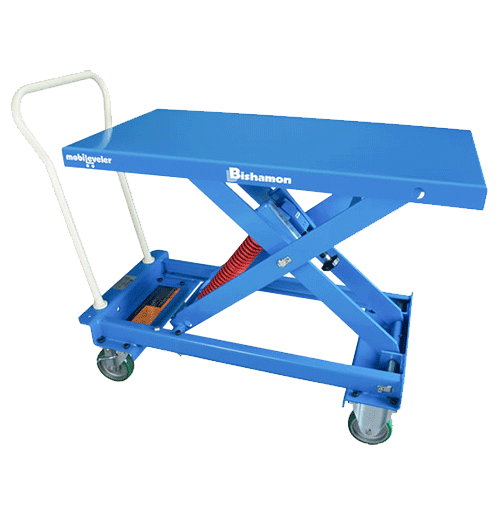
Facilities with limited floor space can explore CompacLift™ compact lift tables, while operations that need to lift and transport materials between work areas can consider the MobiLift™ BX and BXB Series. Bishamon also offers small scissor lift tables for lighter loads and space-constrained workstations.
Selecting the right model requires matching its capacity, platform size, lift range, power source, and configuration to the actual application.
Why Choose Bishamon Hydraulic Lift Tables?
Bishamon hydraulic lift tables are engineered to support safer load positioning, improved workplace ergonomics, and dependable material handling performance. Available in stationary, compact, low-profile, and mobile configurations, these industrial lifting solutions can be matched to a wide variety of warehouse, manufacturing, packaging, and assembly applications.
Rugged construction, flexible platform options, multiple capacities, and application-specific safety features make Bishamon lift tables a practical long-term solution for facilities seeking to reduce manual handling and improve workflow efficiency. Explore Bishamon’s full selection of hydraulic lift tables to compare models for your operation.