Learn About Pallet Jack Dimensions, Including Standard Pallet Jack Width
Choosing the right pallet jack dimensions is an important part of safe, efficient material handling. Pallet jack size affects whether equipment can properly enter a pallet, maneuver through warehouse aisles, turn in confined spaces, support the load, and fit within trailers, stockrooms, production areas, and other material handling environments.
While pallet jacks may look relatively similar, dimensions can vary considerably between models. Fork length, fork width, overall fork spread, lowered height, maximum lift height, and overall equipment size should all be considered before selecting a pallet truck.
Understanding these pallet jack measurements becomes especially important when a facility handles different pallet styles or works in areas with limited clearance. Equipment that is too large may be difficult to maneuver, while forks that are too short, too long, or incorrectly spaced may not properly support the pallet being moved.
Whether your operation handles standard pallets, smaller loads, skids, oversized materials, or specialty pallet configurations, selecting equipment that fits the application can improve safety, productivity, and workflow efficiency.
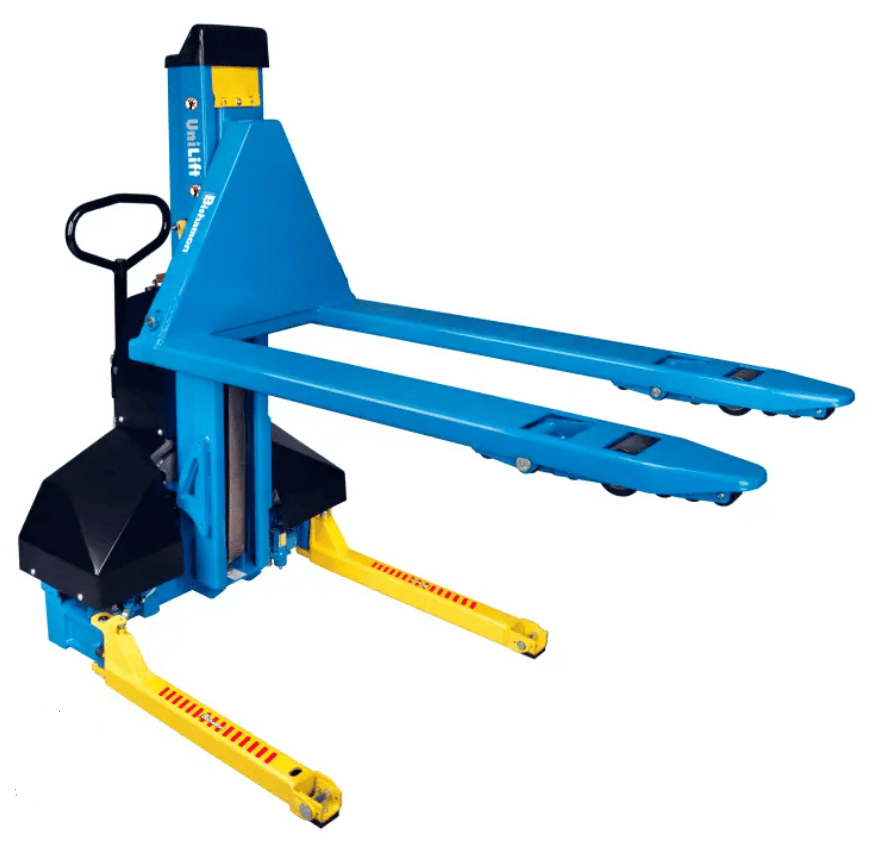
Bishamon offers a range of pallet trucks and skid lifts designed for dependable material handling in warehouses, distribution centers, manufacturing facilities, and other industrial environments.
What Are the Common Dimensions of a Pallet Jack
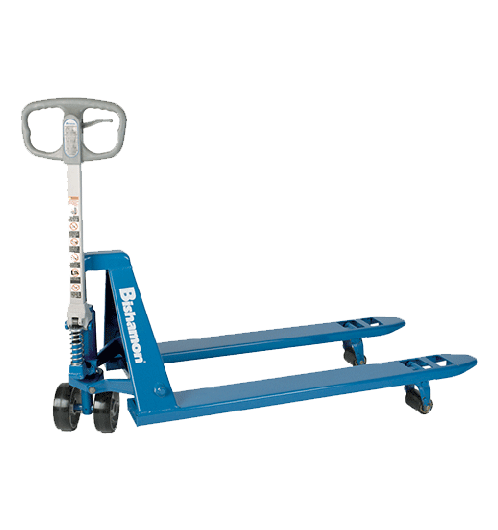
Standard pallet jack dimensions are designed to handle pallets but can vary based on specific models and needs. Typically, pallet jacks have fork lengths of 36 to 48 inches, pallet jack fork width of 6 to 7 inches and a total fork spread of about 20 to 27 inches. The pallet jack lift height of a lowered pallet jack fork is around 3 inches, while the raised fork height is between 7 and 8 inches. These pallet jack sizes suit most standard pallet jack size applications, designed to handle standard pallets measuring 40 inches by 48 inches.
Dimensions of Other Types of Pallet Jack Sizes
Beyond standard pallet truck options, there are various types of pallet jack variations with unique dimensions to accommodate specific tasks and space requirements:
Narrow Pallet Jacks: These have a narrower fork spread, typically around 16 inches wide, making them suitable for handling smaller or specialty pallets in tight spaces.
Mini Pallet Jacks: These compact models often have shorter fork lengths of about 20 to 27 inches, designed for tight or constrained areas like delivery trucks or small storage spaces.
Long Fork Pallet Jacks: Equipped with extended forks that can range from 60 to 96 inches in length, these jacks handle larger or longer pallets.
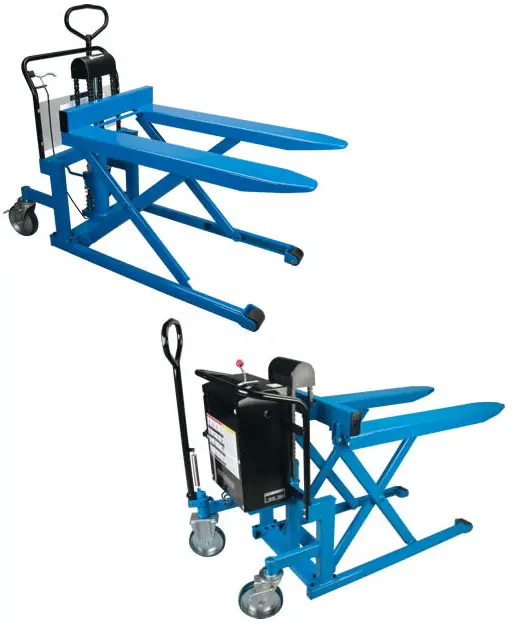
High-Lift Pallet Jacks: Designed to raise loads higher than standard jacks, they often have adjustable fork heights up to 31.5 inches, addressing the question, how high does a pallet jack lift?, and providing ergonomic lifting and positioning.
All-Terrain Pallet Jacks: Built for rough or uneven surfaces, these models have wider and larger wheels to navigate outdoor settings, although their dimensions can vary based on specific terrain needs.
Adjustable Fork Pallet Jacks: These jacks feature adjustable fork spreads, allowing the operator to change the fork width, typically between 21 to 27 inches, to accommodate different pallet sizes.
Each of these variations in pallet jack dimensions serves a specific purpose, improving maneuverability, reach, or lifting capacity based on application needs.
How Wide Is a Pallet Jack
The standard pallet jack width generally refers to the fork spread, which typically measures between 20 and 27 inches. This width allows pallet jacks to easily handle standard pallets, which are usually 40 inches wide. Narrower models, designed for smaller or specialty pallets, can have a fork spread as narrow as 16 inches. This width varies across different types of pallet jacks to meet specific material handling needs, ensuring compatibility with various pallet sizes and workspace constraints.
Additional Considerations for Pallet Jacks
How much does a pallet jack weigh? Most standard pallet jacks weigh between 150 and 200 pounds, depending on their size and construction.
Pallet jack weight limit: Standard pallet jacks typically have weight limits of up to 5,500 lbs, ensuring they meet most material handling requirements.
Pallet jack measurements: When selecting a pallet jack, measuring both the fork length and width, as well as the pallet jack height in both lowered and raised positions, is critical to ensure it fits your operational space and pallet sizes.
How to measure electric jack size: For electric pallet jacks, measure the same dimensions as manual jacks—fork length, fork spread, height, and weight capacity—plus battery compartment size if applicable.
How big is a pallet? Standard pallets measure 40 inches by 48 inches, though pallet dimensioning and pallet dimensioners can help confirm exact dimensions for your workspace.
Shop Bishamon Pallet Jacks Today!
Bishamon is dedicated to providing high-quality pallet jacks, pallet trucks, skid lifts, and ergonomic material handling equipment designed to improve workplace safety, efficiency, and productivity. Our pallet handling solutions are built for durability, smooth operation, and dependable performance in warehouses, distribution centers, manufacturing facilities, and industrial environments.
Whether your operation needs a standard manual pallet jack, a low-profile option, or equipment for specialized pallet handling, Bishamon offers solutions engineered for real-world material handling demands. In addition to pallet trucks, Bishamon provides lift tables, pallet positioners, and mobile handling equipment to help reduce worker strain and improve workflow across your facility.
Contact Bishamon today to learn more about pallet jack sizes, capacities, and equipment options that fit your operation.