Pallet jack steering wheels take on significant wear as equipment moves heavy loads across warehouses, loading docks, production floors, and distribution centers. Over time, worn wheels can make a pallet truck harder to steer, increase rolling resistance, create vibration, and reduce overall material handling efficiency.
Knowing how to replace a steering wheel on a pallet jack can help keep equipment operating smoothly and prevent worn components from causing additional damage. The exact procedure varies by pallet jack model, so always consult the manufacturer’s service manual and parts diagram before beginning. For Bishamon equipment, replacement parts should also be matched to the model and serial number before installation. Bishamon provides both a resource library and model-specific parts resources for its equipment.
Signs It’s Time to Replace a Pallet Jack Steering Wheel
Routine wheel inspections can help identify problems before they begin affecting pallet jack performance. Common signs that a pallet jack steering wheel replacement may be needed include:
- Flat spots, cracks, chunks, or excessive wheel wear
- Difficulty steering or turning the pallet jack
- Increased resistance when rolling
- Excessive vibration during movement
- Uneven or unstable travel
- Grinding, squeaking, or other unusual wheel noises
- Damaged wheel bearings
- A wheel that no longer rotates freely
Floor conditions can also accelerate wheel wear. Pallet trucks used around debris, expansion joints, uneven surfaces, or demanding high-traffic warehouse areas may require more frequent inspection.
Tools Needed to Replace a Pallet Jack Steering Wheel
Required tools vary by pallet truck design, but a typical pallet jack wheel replacement may require:
- Properly sized wrenches or sockets
- Pliers or retaining-ring pliers
- Hammer or rubber mallet
- Punch or axle-removal tool
- Wheel chocks
- Appropriate equipment for securely supporting the pallet jack
- Replacement wheel, bearings, washers, spacers, or retaining hardware as required
- Grease or lubricant specified by the manufacturer
Before starting, confirm that the replacement steering wheel matches the pallet jack model and serial number. Do not assume that wheels from two similar-looking pallet trucks are interchangeable.
Step-by-Step Guide to Replacing a Pallet Jack Steering Wheel
While individual models differ, the general process for replacing a pallet truck steering wheel is:
- Remove the load and lower the forks completely. Never perform wheel maintenance while the pallet jack is carrying material.
- Move the pallet jack to a clean, level work area. Keep the maintenance area away from active warehouse traffic.
- Secure and support the pallet jack. Prevent the unit from rolling or shifting while the wheel is removed.
- Inspect the wheel assembly. Identify retaining rings, axle hardware, washers, spacers, and bearings before disassembly.
- Remove the retaining hardware. Keep components organized in the order they were removed.
- Remove the axle or wheel pin as required by the model.
- Slide the worn steering wheel from the assembly.
- Inspect surrounding components. Check the axle, bearings, bushings, and mounting points for wear or damage.
- Install the replacement wheel and required hardware.
- Reassemble the wheel assembly according to the manufacturer’s parts diagram.
- Test wheel rotation and steering before returning the pallet jack to service.
Do not improvise missing spacers, fasteners, bearings, or retaining components. Replacement parts should meet the specifications for the particular pallet truck.
How to Remove a Pallet Jack Steering Wheel Safely
Safety begins by completely unloading the pallet jack and preventing unexpected movement. The forks should be lowered, the truck should be stable, and the area should provide enough room to work safely.
Once the steering assembly is accessible, note the exact position of all washers, bearings, spacers, retaining rings, and other hardware. Taking a photo before disassembly can make correct reassembly easier.
Never position yourself where the pallet truck could fall or shift onto your hands or body. If the equipment cannot be securely supported or the steering assembly requires more extensive disassembly, use a qualified service technician.
How to Install a New Steering Wheel on a Pallet Jack
Before installing the new wheel, compare it with the removed component. Verify its diameter, width, bearing arrangement, axle opening, and material.
Clean the axle and surrounding mounting surfaces before installation. Replace damaged bearings or hardware rather than reinstalling worn components with a new wheel.
Install the steering wheel with its spacers and washers in the correct order, reinstall the axle and retaining hardware, and tighten components according to the manufacturer’s specifications. Once installed, the wheel should rotate freely without excessive side-to-side movement, binding, or interference.
Common Problems When Replacing Pallet Jack Steering Wheels
Several issues can complicate pallet jack steering wheel replacement. Common problems include seized axle hardware, damaged retaining rings, worn bearings, incorrect replacement wheels, missing spacers, and accumulated debris around the wheel assembly.
If a new wheel still binds or rolls unevenly, the wheel itself may not be the problem. Inspect the axle, bearings, steering head, and related components before continuing to use the truck.
How Often Should Pallet Jack Wheels Be Replaced?
There is no universal replacement interval for pallet jack wheels. Wheel life depends on load weight, operating frequency, floor conditions, wheel material, debris exposure, and maintenance practices.
Instead of replacing wheels according to a fixed calendar schedule, inspect them regularly and replace them when wear begins affecting safe, smooth operation. High-use pallet trucks may require more frequent inspections than equipment used only occasionally.
Safety Tips for Replacing Pallet Jack Steering Wheels
Always work with an unloaded pallet jack, use proper support equipment, and follow the manufacturer’s maintenance instructions. Never exceed the pallet truck’s rated capacity after repairs, and do not return equipment to service until steering and wheel operation have been tested.
If you discover damaged structural components, steering hardware, or hydraulic parts during inspection, additional repairs may be necessary before the pallet jack can be safely used.
How to Replace the Steering Wheel on a Bishamon Pallet Jack
For a Bishamon pallet jack steering wheel replacement, first identify the exact model and serial number. Bishamon’s parts system separates components by model, serial-number range, and certain wheel configurations, making proper identification important before ordering replacement parts.
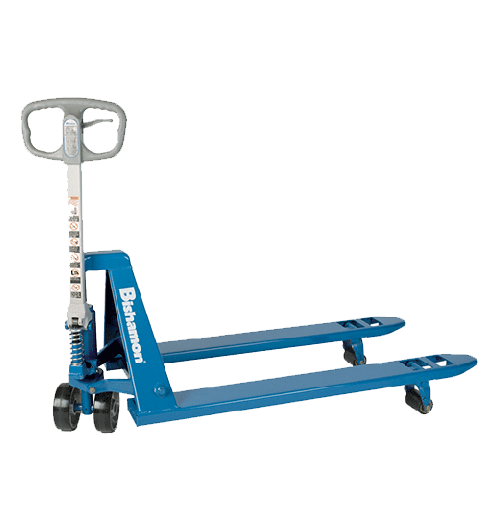
For example, Bishamon’s Blue Label™ BS Series Hand Pallet Trucks use polyurethane steering wheels and premium wheel bearings, and the trucks are designed with rebuildable components for long-term service.
Before disassembling a Bishamon pallet jack, use the appropriate parts breakdown from the Bishamon literature and resources page to identify the correct steering wheel, bearings, axle hardware, and related components. If the required repair extends beyond routine wheel replacement, Bishamon also provides an authorized service locator.
How to Test Pallet Jack Steering After Replacing the Wheel
After installation, rotate the steering wheels manually and confirm that they move freely. Then move the unloaded pallet jack slowly across a smooth, level surface.
Test forward movement, reverse movement, and turns in both directions. The truck should roll smoothly without binding, pulling strongly to one side, excessive vibration, or unusual noises.
If unloaded operation is normal, gradually test the equipment under an appropriate load while staying within its rated capacity. If steering remains difficult, stop using the pallet jack and inspect the assembly again.
Keep Your Pallet Jack Operating Smoothly
Replacing worn steering wheels is an important part of pallet jack maintenance. Correct replacement can restore smoother movement, improve maneuverability, and help extend the service life of the equipment.
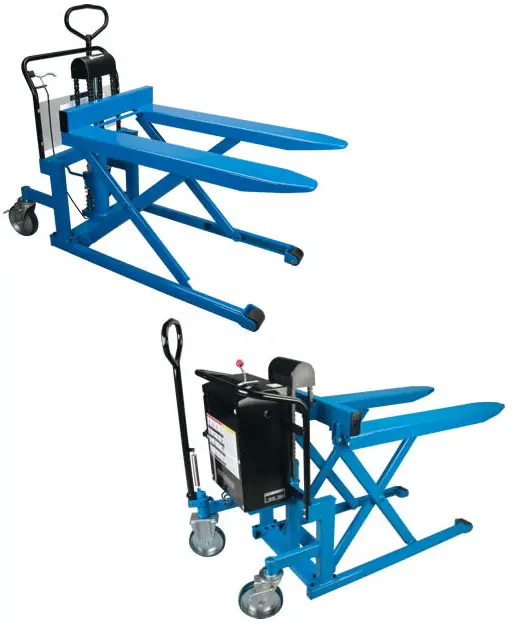
Bishamon’s Blue Label pallet trucks are designed for dependable industrial pallet handling and long-term serviceability. For businesses comparing additional options, explore Bishamon’s complete selection of skid lifts and pallet trucks or read more about choosing the right pallet jack for your warehouse.