Best Pallet Jacks for Warehouses
Choosing the best pallet jack for your warehouse can improve material flow, reduce unnecessary manual handling, and help operators move palletized loads more efficiently. Pallet jacks are used throughout warehouses, distribution centers, manufacturing facilities, stockrooms, and production areas for receiving, staging, stocking, picking, and transporting materials.
The right warehouse pallet jack depends on more than load capacity alone. Pallet dimensions, fork size, aisle width, lift height, floor conditions, travel distance, frequency of use, and the type of handling being performed should all influence equipment selection.
Bishamon offers a range of skid lifts and pallet trucks designed for industrial material handling, including equipment for basic pallet transport as well as elevated load positioning.
What Is a Pallet Jack?
A pallet jack, also called a pallet truck, is a material handling device designed to lift a pallet slightly above the floor so it can be moved from one location to another.
Most pallet jacks use two forks that slide beneath a pallet. The operator raises the forks enough to clear the floor, allowing the palletized load to be transported through the facility.
Warehouse pallet jacks are commonly used for:
Moving inventory between storage and production areas
Loading and unloading staging zones
Transporting pallets through warehouse aisles
Replenishing stock
Moving materials to packing or assembly areas
Supporting shipping and receiving operations
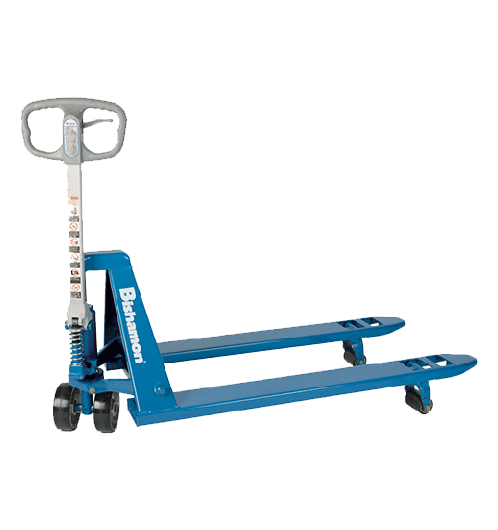
For everyday manual pallet movement, Bishamon’s Blue Label™ Hand Pallet Trucks provide a durable option for transporting palletized materials.
What Are the Main Types of Pallet Jacks?
Understanding the different types of pallet jacks can help facilities choose equipment suited to their workflow.
Manual Pallet Jacks
Manual pallet jacks are among the most common options for warehouse material handling. Operators use a hand-controlled hydraulic system to raise the forks and manually push or pull the load.
They are well suited for shorter travel distances, routine pallet movement, and operations where loads do not require powered transportation.
High-Lift Pallet Jacks
High-lift pallet jacks provide both pallet transportation and elevated positioning. Instead of only raising a pallet enough for transport, these models can bring the load closer to a comfortable working height.
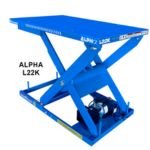
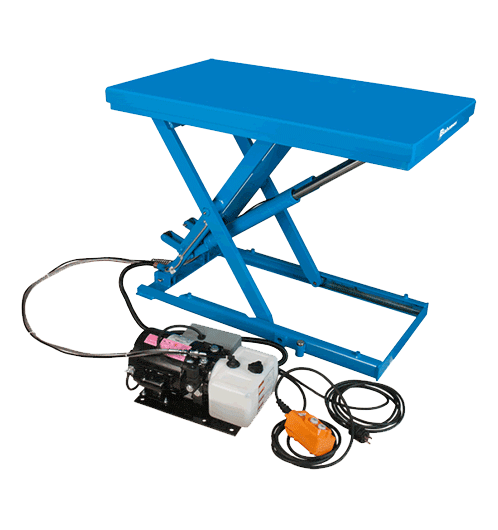
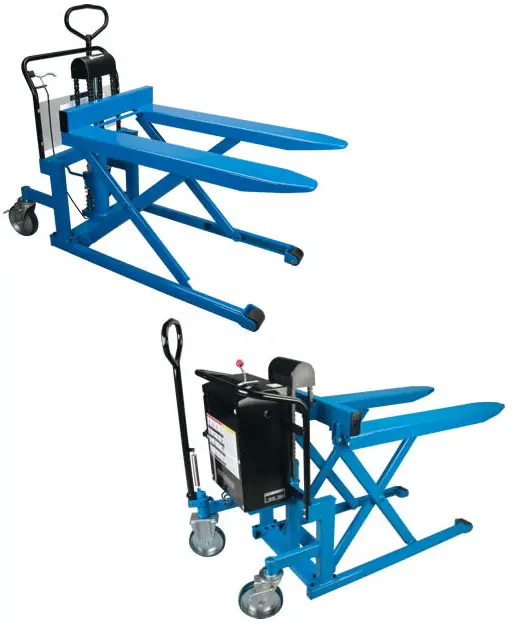
Bishamon Scissor Lift Pallet Jacks combine pallet mobility with elevated positioning, making them useful for loading, unloading, assembly, and other repetitive material handling applications.
Powered Pallet Handling Equipment
Powered pallet equipment can reduce the physical effort required to transport materials, especially when loads travel longer distances or material movement occurs frequently throughout the workday.
When comparing manual and powered options, facilities should consider load weight, travel distance, handling frequency, operator requirements, floor conditions, and available space.
How to Choose the Right Pallet Jack Size
One of the most important factors when choosing a pallet jack is ensuring the equipment fits the pallets used within the facility.
Consider both fork length and fork width. Forks must properly engage the pallet and provide appropriate load support without creating unnecessary maneuverability problems.
Warehouse operators should evaluate:
A pallet jack that is too large for the operating area may be difficult to maneuver, while incorrectly sized forks may not properly support the pallet.
This becomes particularly important in warehouses that handle multiple pallet or skid sizes.
How to Determine Pallet Jack Load Capacity
The correct pallet jack weight capacity should be based on the heaviest complete palletized load the equipment will handle.
That means accounting for more than the product itself. The total load may include:
Operators should never exceed the manufacturer’s rated capacity.
Warehouses should also consider whether future inventory or production requirements may involve heavier loads. Selecting equipment that appropriately accommodates anticipated material handling needs can provide greater operational flexibility.
For heavy loads, capacity should be evaluated alongside pallet dimensions, load distribution, travel distance, and floor conditions rather than treated as a standalone specification.
What Is the Best Pallet Jack for Heavy Loads?
The best pallet jack for heavy loads is one specifically rated for the maximum pallet weight being transported and configured for the facility’s handling requirements.
Capacity is important, but fork dimensions, wheel configuration, load stability, aisle space, and frequency of use are equally relevant.
For applications where loads need to be raised beyond basic transportation height, facilities may benefit from high-lift equipment rather than a standard hand pallet truck.
Bishamon’s Scissor Lift Pallet Jacks can transport palletized materials while also raising loads to a more ergonomic working height for appropriate applications.
What Is the Best Pallet Jack for Small Warehouses and Tight Spaces?
In small warehouses, stockrooms, narrow aisles, and compact production areas, maneuverability becomes a major consideration.
The best pallet jack for tight spaces should provide appropriate fork dimensions and load capacity while still allowing operators to turn, position, and transport pallets within the available aisle space.
Before selecting equipment, measure:
Aisle width
Doorways
Storage rack clearance
Turning areas
Workstation space
Pallet dimensions
Compact equipment can be especially useful where forklifts or larger material handling equipment are difficult to maneuver.
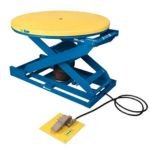
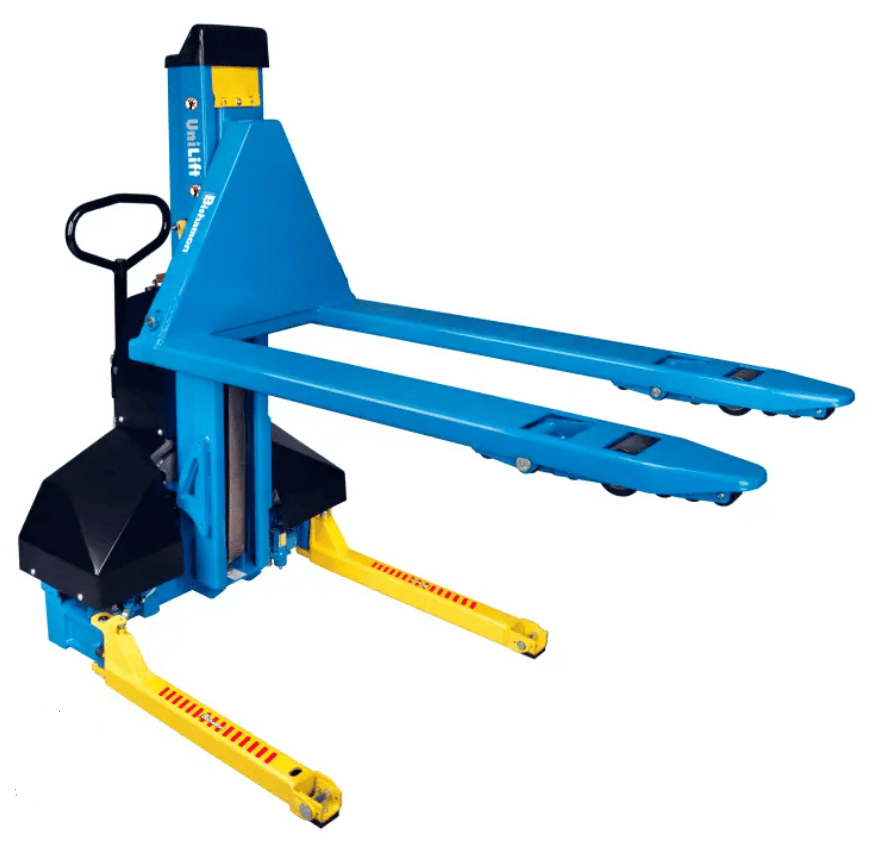
For applications requiring both pallet mobility and elevated positioning, the Bishamon UniLift® provides another approach to transporting and positioning palletized loads.
Manual vs. Electric Pallet Jacks
When comparing a manual vs. electric pallet jack, the better option depends on the actual warehouse workflow.
Manual pallet jacks are often practical for shorter distances, moderate handling volumes, and straightforward pallet transportation. Their relatively simple design also makes them easy to integrate into many warehouse environments.
Powered pallet handling equipment may provide advantages when loads are moved repeatedly, travel longer distances, or require reduced operator effort.
Consider:
Choosing equipment based solely on whether it is powered or manual can overlook other factors that have a greater effect on warehouse performance.
How High Does a Pallet Jack Lift?
A standard pallet jack is primarily designed to raise a pallet enough to clear the floor for transportation.
Facilities that need pallets raised to a higher working position should consider equipment specifically designed for elevated load handling.
High-lift pallet trucks and scissor lift pallet jacks can bring materials closer to an ergonomic working height, which may help reduce unnecessary bending and reaching during repetitive loading and unloading.
The appropriate lift height depends on how the material will be handled after it is transported.
Key Factors When Choosing a Warehouse Pallet Jack
Before selecting a pallet jack, evaluate the equipment against the actual demands of the operation.
Important considerations include:
These factors help determine whether a standard hand pallet truck, high-lift pallet jack, or another type of material handling equipment is the best fit.
Pallet Jack Safety Features and Considerations
Safe pallet handling begins with choosing equipment that matches both the load and operating environment.
Operators should look for durable forks, reliable steering, properly functioning hydraulic components, stable wheels and rollers, and clearly marked load capacities.
Pallet jacks should also be inspected regularly for:
Loads should remain stable and properly positioned on the forks during transportation.
High-lift applications should always use equipment engineered for elevated positioning instead of attempting to make a standard pallet jack perform a task outside its intended design.
Why Choose Bishamon Pallet Jacks and Material Handling Equipment?
Bishamon manufactures ergonomic material handling equipment for warehouses, manufacturing facilities, distribution centers, and production operations.
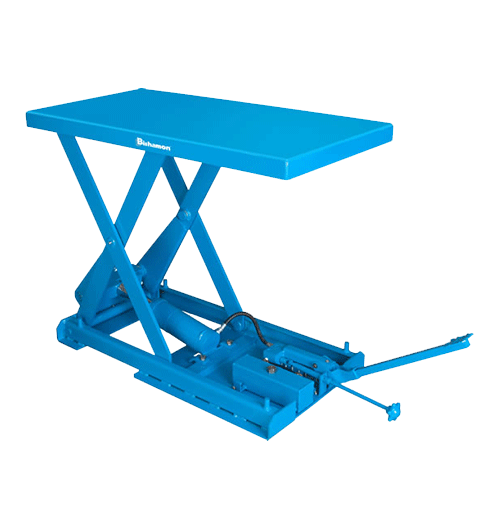
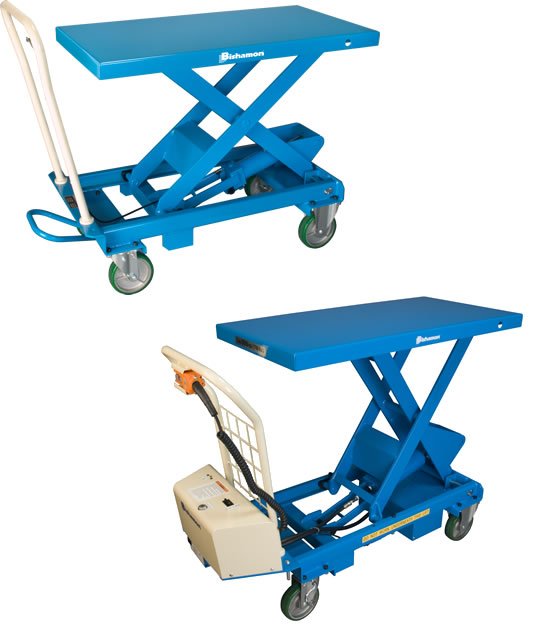
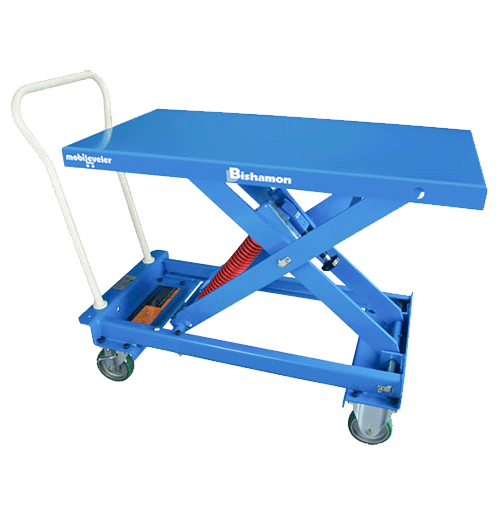
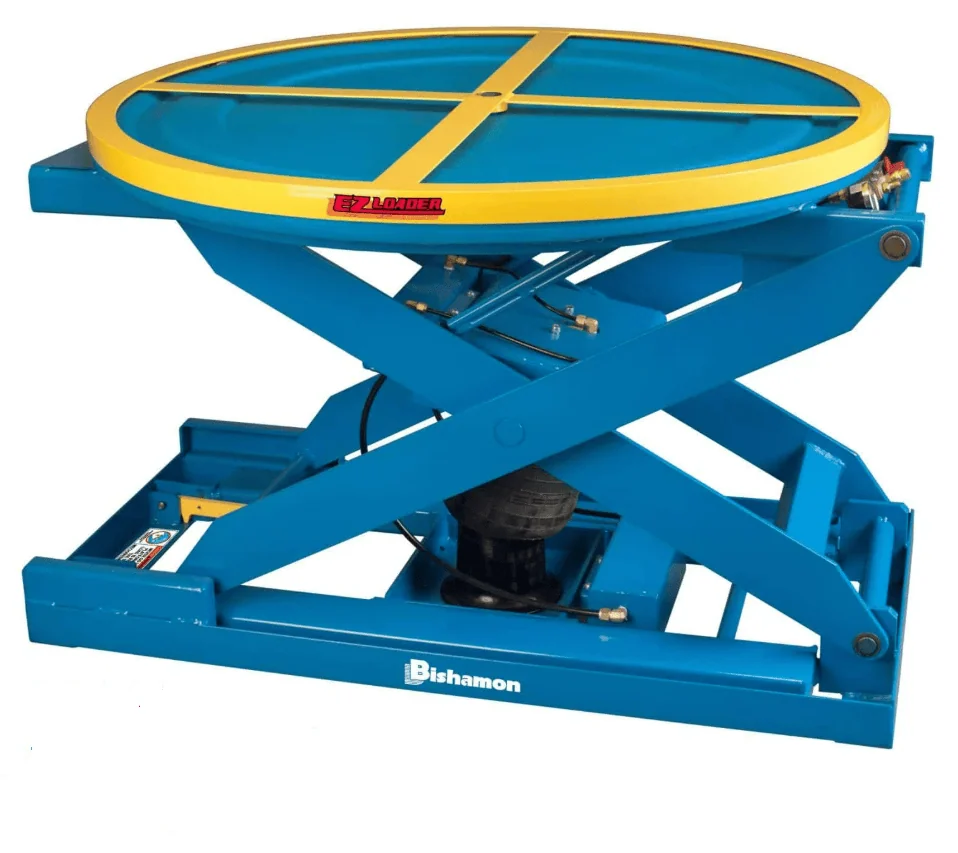
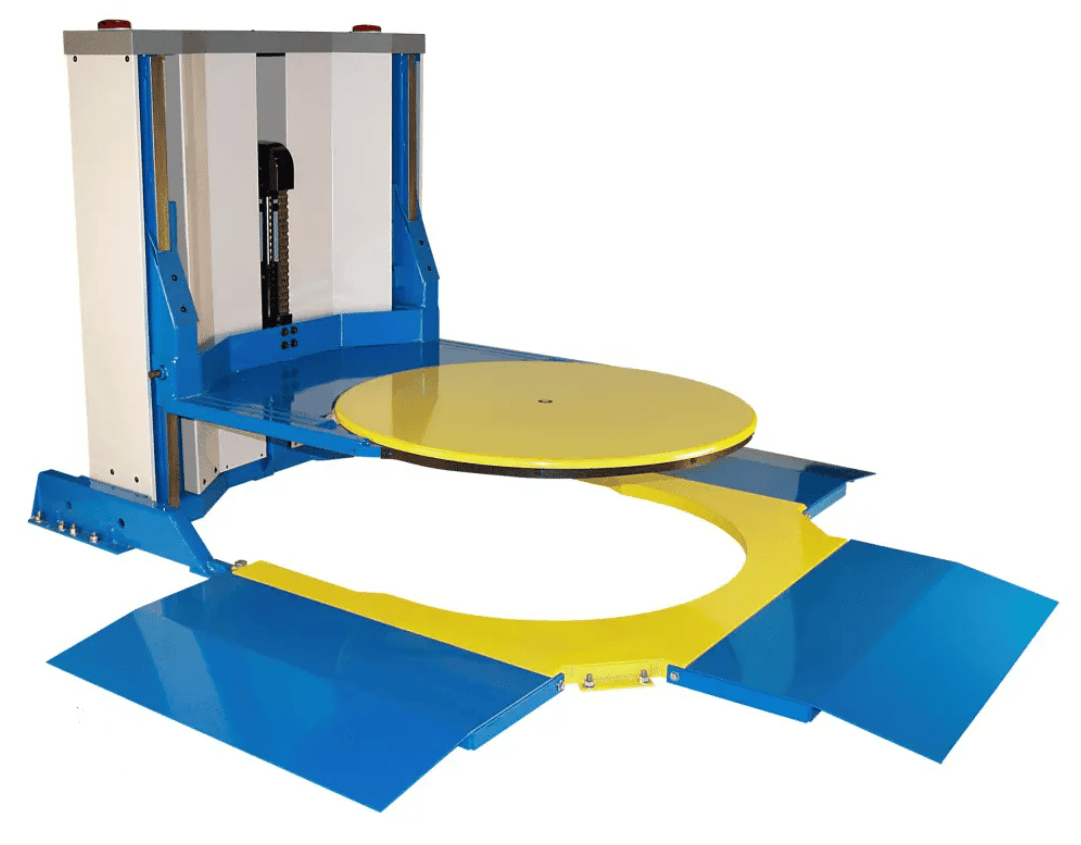
The product lineup includes pallet trucks and skid lifts, scissor lift pallet jacks, lift tables, and pallet positioners designed to support a variety of industrial workflows.
Whether the goal is straightforward pallet transportation, better maneuverability in tight warehouse spaces, higher load positioning, or improved workstation ergonomics, the right equipment should be selected based on load capacity, pallet dimensions, available space, and the way materials move through the facility.