How High Can A Pallet Jack Lift
When evaluating pallet jacks for warehouse, distribution, manufacturing, or industrial applications, understanding pallet jack lift height is essential for choosing equipment that fits the job. While pallet jacks are commonly associated with moving palletized loads across a facility, the height a pallet jack can lift varies significantly depending on whether you are using a standard hand pallet truck, a high-lift pallet jack, a skid lift, or a powered pallet positioning system.
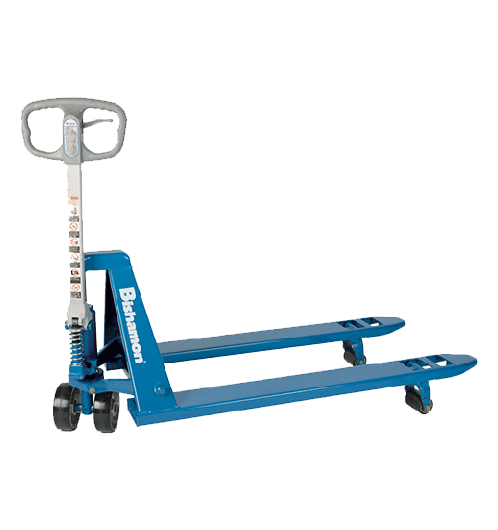
Standard pallet jacks are primarily designed for horizontal transport. Their forks lift a pallet only high enough to clear the floor so operators can move materials efficiently between storage areas, loading docks, production lines, staging zones, and other workspaces. Bishamon’s Blue Label™ hand pallet trucks, for example, provide raised fork heights between approximately 5.5 and 8 inches depending on the model.
When an application requires materials to be raised much higher, specialized equipment is typically needed. High-lift pallet jacks, skid lifts, and pallet positioners can elevate materials to a more comfortable working height, reducing the amount of repetitive bending, reaching, and manual lifting required during loading, unloading, assembly, packaging, and production tasks.
The correct pallet jack height also depends on the pallet or skid being handled. Standard closed-bottom pallets, open-bottom pallets, CHEP pallets, and specialty skids can have different equipment requirements, so businesses should consider pallet compatibility in addition to maximum lift height.
Choosing the appropriate pallet jack lift height can improve material flow, support better workplace ergonomics, and help prevent product damage caused by improper handling or positioning. Facilities comparing equipment should also consider capacity, fork dimensions, maneuverability, and the distance loads need to travel. Bishamon’s guides to standard pallet jack dimensions and pallet jack weight capacity provide additional information for selecting the right material handling equipment.
What Is the Highest a Pallet Jack Can Lift
The maximum height a pallet jack can lift depends heavily on the type of equipment being used. There is no single standard maximum pallet jack lift height because conventional pallet trucks and high-lift pallet handling equipment are designed for different purposes.
A standard manual pallet jack generally raises a load only several inches above the floor. This provides enough clearance for the load wheels and pallet to travel across smooth warehouse surfaces without requiring unnecessary vertical travel. Bishamon’s Blue Label™ BS Series hand pallet trucks illustrate this type of floor-level transport equipment, with raised fork heights ranging from 5.5 inches on the low-profile BS-25A model to approximately 8 inches on the high-capacity BS-65A.
For operations requiring substantially greater elevation, a conventional pallet truck should not be used as though it were a work-positioning lift. Instead, facilities can use equipment specifically designed to combine material transport with elevated load positioning.
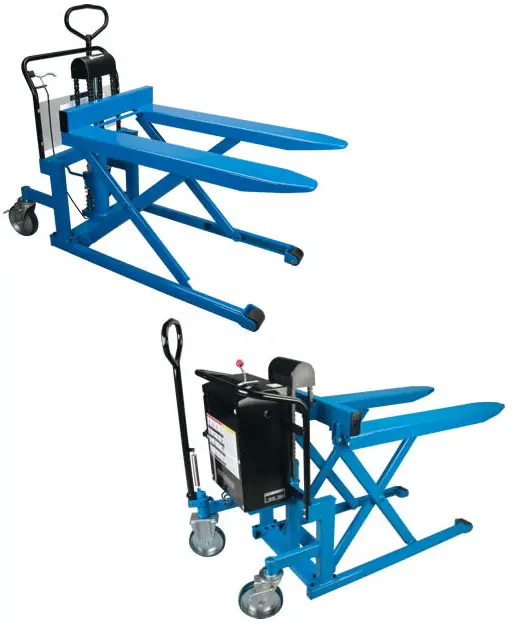
Bishamon’s SkidLift™ LV and LVE Series can raise compatible skids and open-bottom pallets to a fork height of approximately 32.8 inches. These high-lift skid jacks are available in manual hydraulic and battery-operated configurations and provide capacities up to 2,200 lbs., depending on the model.
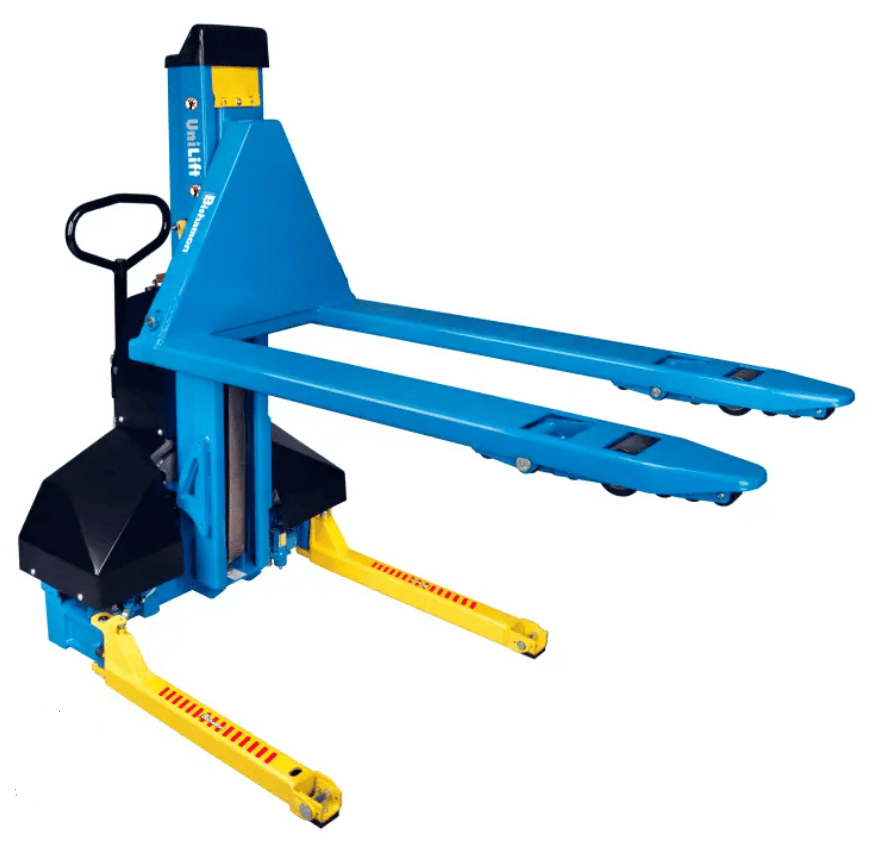
Facilities handling standard GMA pallets, CHEP pallets, or skids can also consider the UniLift™ pallet transporter and work positioner. This powered high-lift pallet handling solution reaches fork heights of up to 36 inches unloaded while providing load capacities up to 2,000 lbs. depending on operating configuration and load center.
This means the answer to “how high can a pallet jack lift?” depends on what the equipment is designed to accomplish:
- Standard pallet jacks primarily provide enough lift for floor-level pallet transportation.
- High-lift skid jacks raise compatible skids and open-bottom pallets to an ergonomic work height.
- Powered pallet positioners and transporters can combine pallet movement with substantially greater vertical positioning.
Operators should never attempt to exceed a pallet jack’s specified lift height or rated capacity. Always use the manufacturer’s specifications to confirm pallet compatibility, maximum fork height, load capacity, and intended application before handling a load.
Electric Pallet Jack Lift Height
Electric and battery-powered pallet handling equipment can reduce the physical effort required to repeatedly raise and lower loads, making powered models useful for high-volume warehouse, production, assembly, and distribution environments.
However, electric pallet jack lift height varies considerably by equipment type. Some powered pallet trucks are still designed primarily for horizontal transportation and only raise loads enough to clear the floor. Other powered high-lift pallet jacks and pallet positioners are specifically designed to elevate materials to a working height.
For example, Bishamon’s UniLift™ uses an electric-hydraulic lifting system powered by a 24V DC battery. It handles and steers similarly to a standard pallet jack while allowing operators to transition from pallet transport to elevated work positioning. The forks can reach heights of up to 36 inches unloaded, allowing materials to be brought substantially closer to the operator.
The UniLift™ is designed to handle standard GMA pallets, 48-inch by 40-inch CHEP pallets, and skids without requiring the equipment to straddle the load. Its combination of transport and positioning capabilities makes it useful for repetitive pallet loading, unloading, staging, assembly, and workstation applications.
Bishamon also offers the battery-operated LVE Series within its SkidLift™ LV and LVE lineup. These powered skid lifts raise compatible open-bottom pallets and skids to approximately 32.8 inches and can handle capacities of up to 2,200 lbs.
When comparing manual vs. electric pallet jack lift height, businesses should therefore look beyond the power source. The intended purpose of the equipment—floor-level transport or elevated load positioning—has a much greater impact on maximum lifting height.
High Lift Skid Jack and Raising Pallet Jack
For operations that need both mobility and elevated material access, a high-lift skid jack or raising pallet jack can provide a valuable alternative to a conventional hand pallet truck.
Instead of lifting a pallet only enough to move it across the floor, high-lift equipment raises the load toward a more ergonomic working height. This allows employees to access materials without repeatedly bending toward floor level, which can be especially helpful during repetitive picking, packing, assembly, inspection, loading, unloading, and production tasks.
Bishamon’s high-lift pallet jacks and skid lifts include several options designed around different pallet types and workflows.
The SkidLift™ LV Series uses manual foot-pump hydraulic operation, while the LVE Series provides battery-powered lifting. Both are designed primarily for skids and open-bottom pallets and are available in narrow and wide fork configurations with load capacities of 1,000 or 2,200 lbs. Their 29.5 inches of vertical travel allows the forks to move from a lowered height of 3.3 inches to a raised height of 32.8 inches.
For operations handling conventional pallets, the UniLift™ offers another approach. It functions as both a pallet transporter and elevated work positioner, helping businesses move a pallet into place and then raise it for easier operator access.
The difference in pallet compatibility is important. A standard hand pallet truck may work well for routine pallet transport, while the LV/LVE Series is designed specifically around skids and open-bottom pallets. The UniLift™, meanwhile, is designed to accommodate standard GMA pallets, CHEP pallets, and skids.
Matching equipment to the load prevents businesses from purchasing a high-lift solution that does not properly engage the pallets used throughout their facility.
High-lift pallet handling equipment can be especially valuable in:
- Manufacturing and assembly workstations
- Warehouse picking and packing areas
- Production and processing environments
- Loading and unloading applications
- Material staging operations
- Inspection and quality-control areas
- Repetitive palletizing and depalletizing tasks
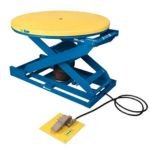
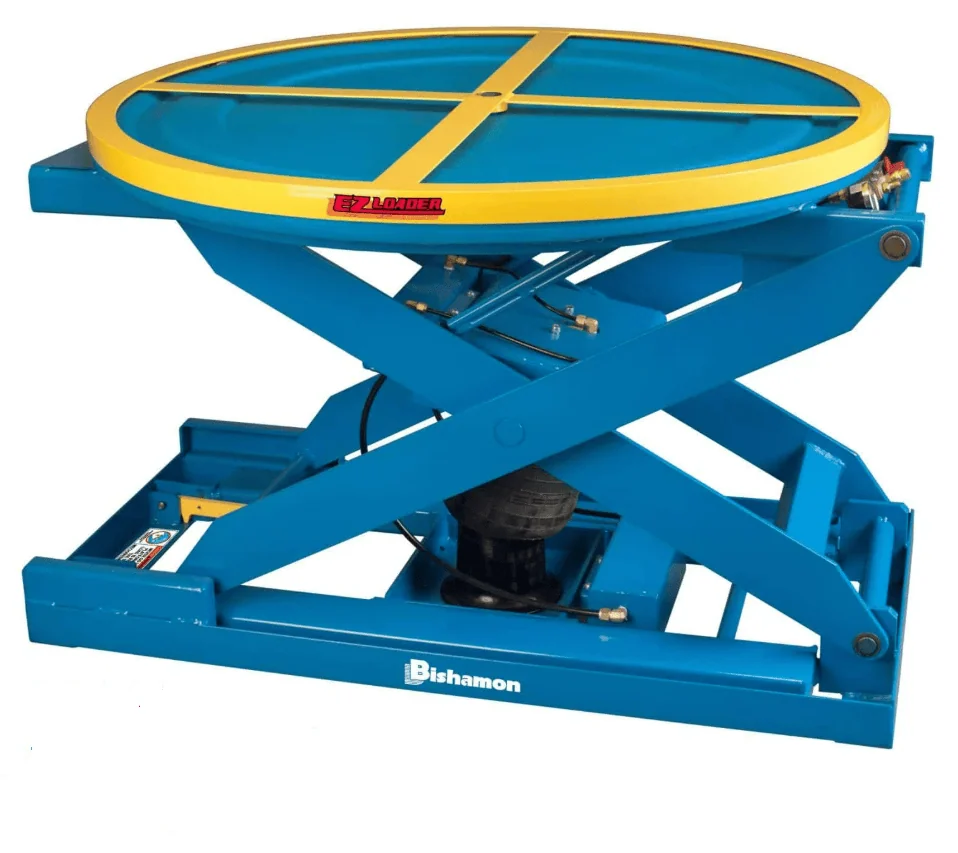
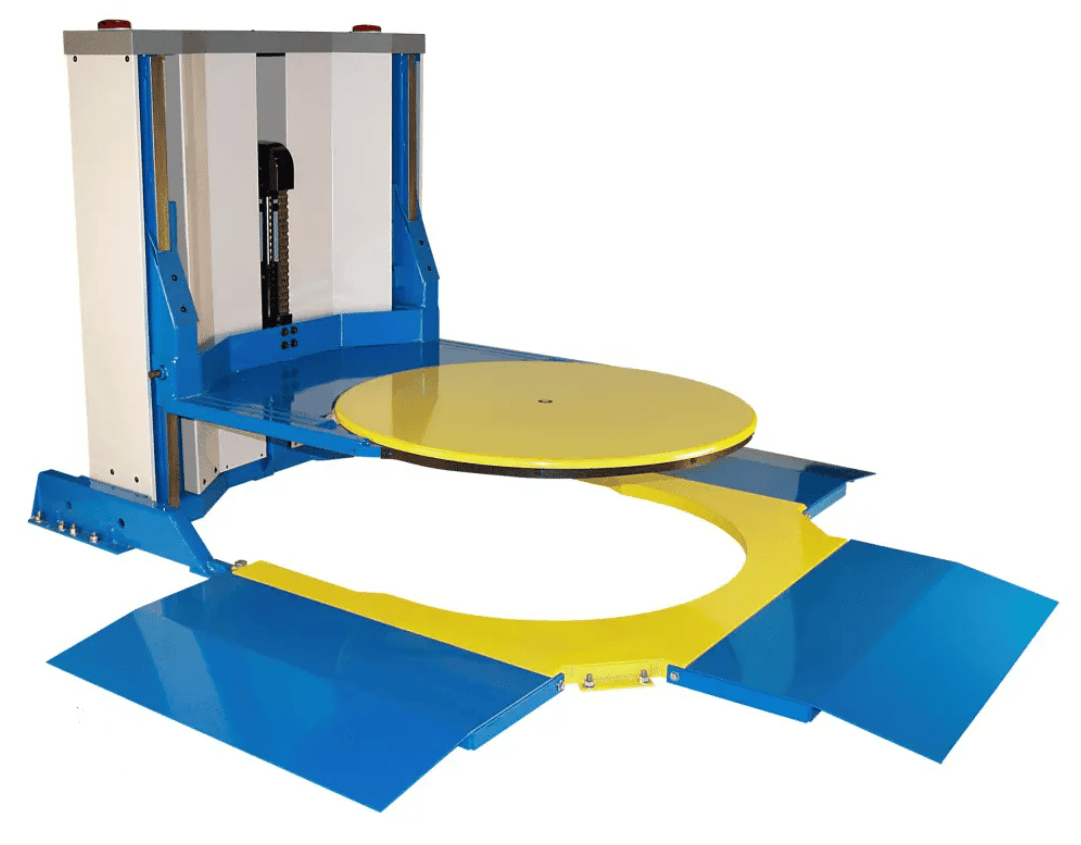
For operations where the load needs to remain stationary but automatically adjust as products are added or removed, a pallet positioner may be more appropriate than a high-lift pallet jack. Products such as Bishamon’s EZ Loader® self-leveling pallet positioner are designed to maintain materials near a convenient working height as load weight changes.
Facilities should evaluate the entire workflow—including how materials arrive, how far they travel, how operators interact with them, and how they leave the workstation—to determine whether a standard pallet jack, skid lift, high-lift pallet jack, or pallet positioner provides the best solution.
Shop Bishamon Pallet Jacks Today!
At Bishamon, we provide durable pallet jacks, high-lift pallet handling equipment, skid lifts, and ergonomic material handling solutions designed to improve workplace safety, efficiency, and productivity.
For dependable floor-level pallet transport, Bishamon’s Blue Label™ BS Series hand pallet trucks are available in multiple fork lengths, fork widths, lowered heights, and capacities ranging from 2,500 to 6,500 lbs. This flexibility allows businesses to match pallet truck dimensions and capacity to their specific warehouse and material handling requirements.
When loads need to be elevated rather than simply transported, Bishamon also offers high-lift pallet jacks, including the manual LV SkidLift™, battery-operated LVE SkidLift™, and UniLift™ pallet transporter and work positioner. These solutions help bring materials closer to an ergonomic working height while supporting loading, unloading, staging, assembly, packaging, and production workflows.
Businesses can explore Bishamon’s complete selection of skid lifts and pallet trucks to compare solutions based on pallet compatibility, lifting height, load capacity, fork dimensions, and power requirements.
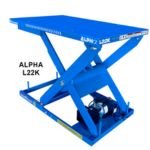
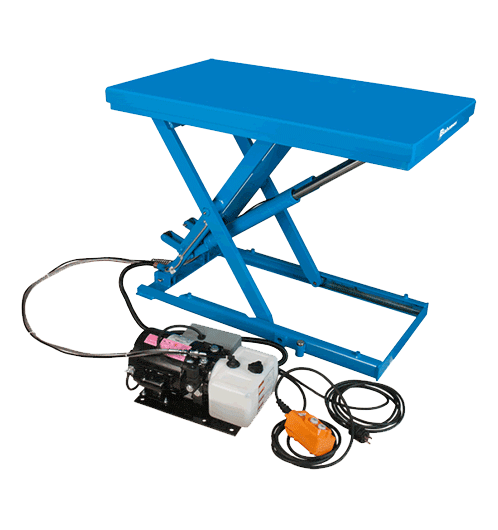
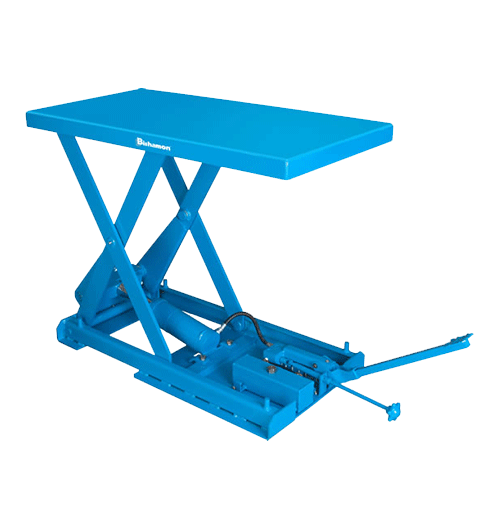
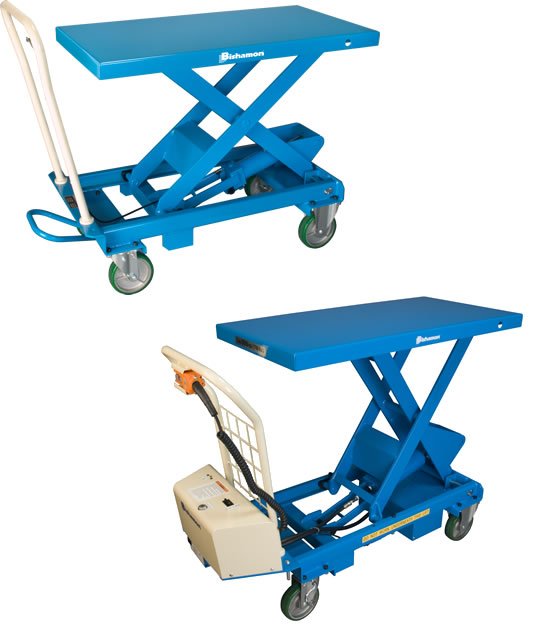
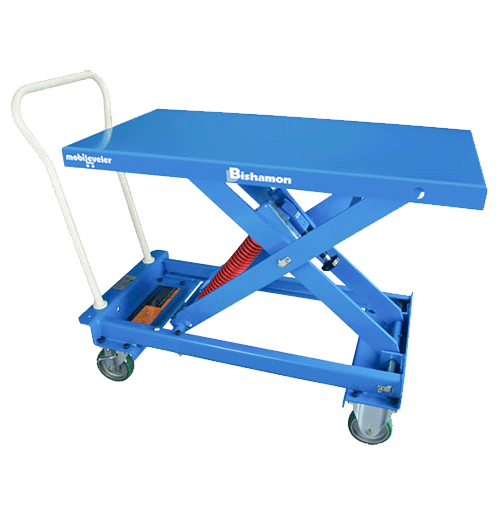
In addition to pallet jacks and skid lifts, Bishamon manufactures lift tables, pallet positioners, and mobile handling equipment for facilities looking to improve material positioning throughout their operation. These ergonomic solutions can help reduce unnecessary bending, reaching, lifting, and material handling while creating smoother workflows across warehouses, distribution centers, manufacturing facilities, and other industrial environments.
Contact Bishamon today to learn more about pallet jack lift heights, compare pallet handling equipment, and find the right solution for your application.