How a Hydraulic Scissor Lift Table Works and Improves Efficiency
Hydraulic scissor lift tables are ergonomic material handling tools designed to raise, lower, and position heavy materials safely and efficiently. By combining hydraulic lifting power with a scissor-style mechanism, these industrial lift tables allow workers to bring materials to a more comfortable working height instead of repeatedly bending, lifting, reaching, or stretching.
In warehouses, manufacturing facilities, assembly lines, maintenance areas, packaging stations, and distribution centers, hydraulic lift tables can improve productivity by making load positioning more controlled and consistent. They are commonly used for assembly, machine feeding, loading and unloading, inspection, packaging, and general material positioning.
This guide explains how hydraulic scissor lift tables work, their primary components, common applications, safety considerations, and what businesses should consider when selecting equipment. For additional options, explore Bishamon’s hydraulic lift tables and complete selection of industrial lift tables.
What Is a Hydraulic Scissor Lift Table?
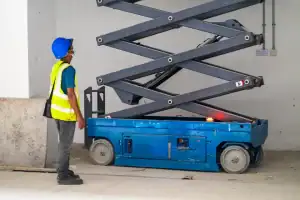
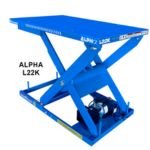
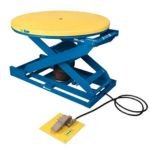
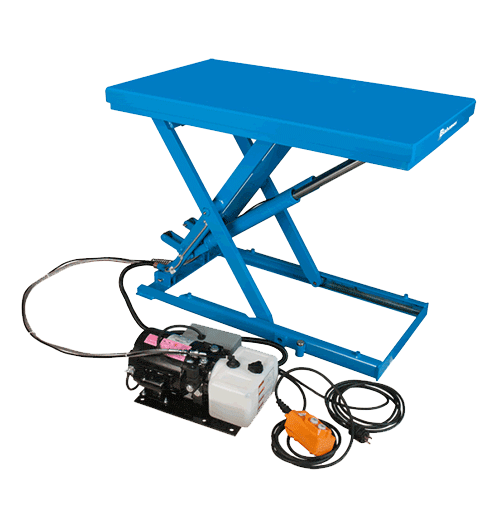
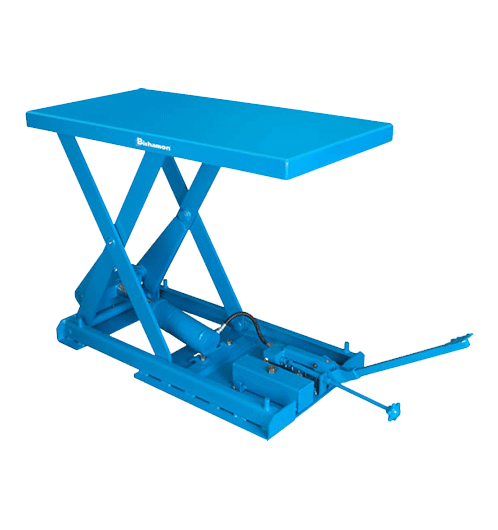
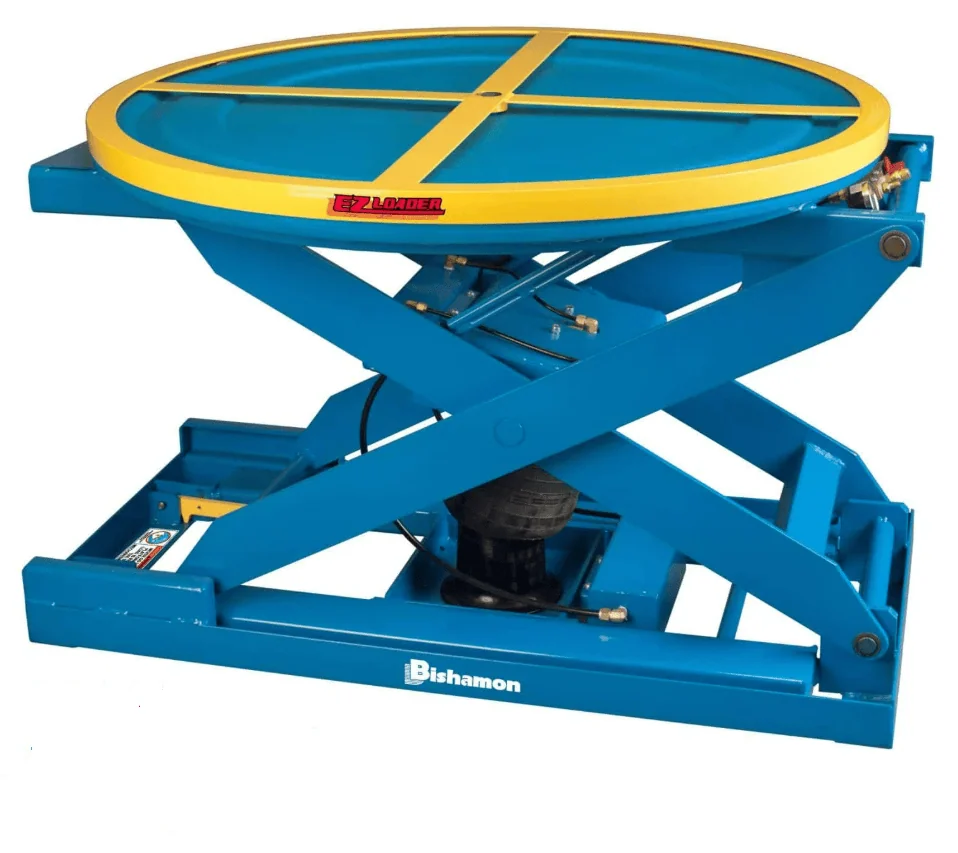
A hydraulic scissor lift table is a material handling platform that uses hydraulic pressure to raise and lower a load vertically. Beneath the platform, crossed steel arms form a scissor mechanism that expands as the table rises and contracts as it lowers.
When hydraulic pressure is applied, a cylinder extends and transfers force through the scissor mechanism, raising the platform. When the system releases hydraulic pressure in a controlled manner, the platform descends.
This design allows hydraulic lift tables to position materials at different working heights without requiring employees to repeatedly lift or reposition heavy loads manually.
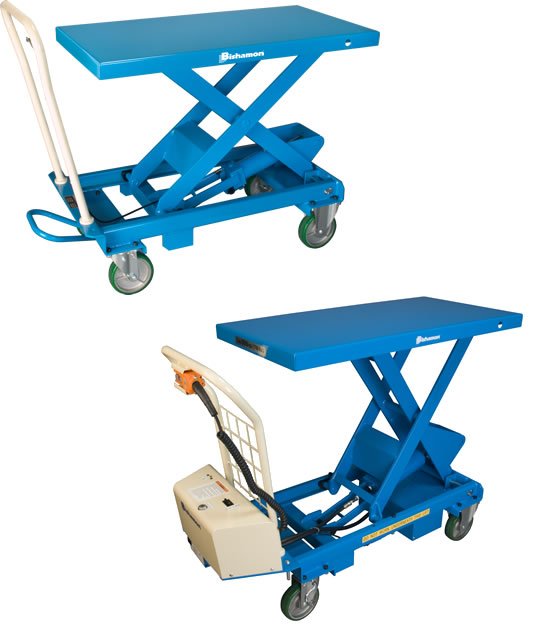
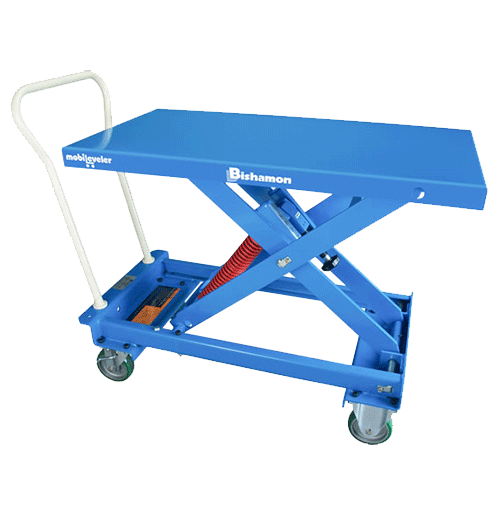
Bishamon offers both stationary lift tables for dedicated work areas and mobile configurations for applications where materials need to travel throughout a facility.
How Does a Hydraulic Scissor Lift Table Function?
The lifting process begins when the operator activates the hydraulic system. Hydraulic fluid is directed into a cylinder, creating pressure that moves the piston. That movement pushes against the lift mechanism, causing the scissor arms to open and the platform to rise.
To lower the platform, hydraulic fluid flows back through the system at a controlled rate. As pressure decreases, the scissor mechanism retracts and the table lowers.
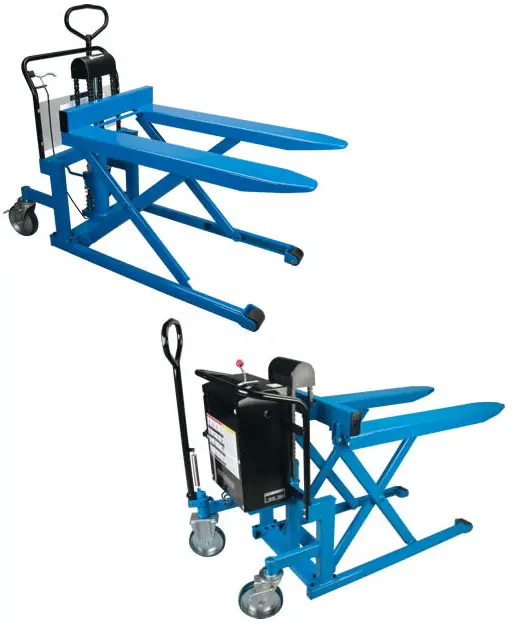
Depending on the equipment, operation may be controlled through a foot pump, hand control, push-button station, or battery-powered lifting system. The appropriate operating method depends on the application, required lifting frequency, mobility, and overall workflow.
For applications that require materials to move between different work areas, Bishamon mobile lift tables combine load positioning with greater maneuverability.
Key Parts of a Hydraulic Scissor Lift Table
Although configurations vary, most hydraulic scissor lift tables rely on several primary components working together.
Platform: The upper surface supports the material being lifted. Platform dimensions should match the size and distribution of the intended load.
Scissor Mechanism: Crossed support arms expand and retract to create vertical movement while supporting the platform.
Hydraulic Cylinder: The cylinder converts hydraulic pressure into the mechanical force needed to raise the table.
Hydraulic Pump: The pump moves hydraulic fluid through the system and creates the pressure required for lifting.
Base Frame: The base supports the lifting mechanism and helps keep the table stable during operation.
Controls: Controls allow the operator to raise, lower, or stop the platform depending on the table configuration.
Safety and Maintenance Components: Depending on the model, lift tables may incorporate devices designed to support safe operation, servicing, and controlled lowering.
The condition of each component can affect overall lift performance, making routine inspection and manufacturer-recommended maintenance important.
Best Industries for Hydraulic Scissor Lift Tables
Hydraulic scissor lift tables can be used anywhere workers routinely handle materials at varying heights.
Manufacturing: Lift tables can position components beside assembly stations, machinery, and production lines.
Warehousing and Logistics: Tables support material staging, loading, unloading, sorting, and order preparation.
Packaging: Adjustable platform heights make cartons and products easier to access during repetitive packing tasks.
Automotive and Industrial Maintenance: Parts, assemblies, tools, and equipment can be positioned closer to technicians during work.
Distribution Centers: Hydraulic lifting equipment helps position incoming and outgoing products while reducing unnecessary manual handling.
Businesses with fixed, repetitive lifting applications may benefit from stationary configurations, while operations that frequently move materials between stations may be better suited for portable equipment such as Bishamon’s MobiLift™ BX and BXB mobile lift tables.
Safety Features of Hydraulic Scissor Lift Tables
Safe operation begins with selecting a lift table that matches the load and application. Equipment should never be operated beyond its rated capacity, and loads should be positioned securely on the platform.
Depending on the model and configuration, lift tables may include safety or maintenance features such as pressure-control systems, maintenance supports, platform guards, emergency controls, or devices that help manage lowering speed.
Workers should always follow the manufacturer’s operating instructions and keep hands, feet, clothing, tools, and other objects away from moving components and pinch points.
Routine inspection is also important. Hydraulic leaks, damaged components, unusual noises, uneven platform movement, or problems with controls should be addressed before the equipment returns to normal operation.
Benefits of Hydraulic Scissor Lift Tables for Businesses
The main advantage of a hydraulic lift table is its ability to bring materials closer to the worker.
Instead of repeatedly lifting a heavy item from floor level or reaching down into a container, employees can adjust the platform to a more accessible working height. This can reduce unnecessary bending, lifting, reaching, and stretching during repetitive tasks.
Hydraulic lift tables can also improve productivity by reducing the time spent manually repositioning materials. In assembly, packaging, production, and warehouse environments, even small improvements in material access can help make high-volume workflows more efficient.
Their versatility also allows businesses to choose between stationary, low-profile, compact, and mobile configurations depending on the application.
Standard Sizes and Weight Capacities for Hydraulic Scissor Lift Tables
Hydraulic scissor lift tables are available in a wide range of capacities, platform dimensions, and lift heights.
A compact workstation may require a relatively small platform, while pallet handling or industrial production applications may require larger tables with significantly greater capacities.
When comparing equipment, businesses should evaluate:
Selecting a table based only on maximum capacity can result in equipment that does not properly fit the load or surrounding workflow.
How to Operate a Hydraulic Scissor Lift Table Safely
Before using a lift table, inspect the equipment and surrounding work area. Confirm that the platform and controls appear to be functioning properly and that the load is within the equipment’s rated capacity.
Position loads as evenly as possible on the platform and avoid unstable or poorly supported materials. Keep the area around the lift clear while the table is moving, and do not reach into the scissor mechanism.
Operators should raise and lower loads using smooth, controlled movements. Any maintenance performed beneath a raised platform should follow the manufacturer’s required procedures and use the appropriate maintenance supports or locking devices.
How to Choose the Right Hydraulic Scissor Lift Table
Start by identifying exactly how the equipment will be used. A table used for repeated assembly work has different requirements than one used primarily for pallet loading or occasional maintenance.
Consider the load weight, platform dimensions, lifting frequency, required height, lowered height, available space, and whether the table needs to remain stationary or move throughout the facility.
For dedicated production areas, stationary lift tables may provide the best fit. Facilities that need greater flexibility can explore Bishamon’s mobile lift tables.
Operations should also consider whether a hydraulic system is the right power method. Bishamon’s broader lift table lineup includes hydraulic, electric-hydraulic, pneumatic, compact, low-profile, stationary, and mobile configurations for different material handling needs.
Can Hydraulic Scissor Lift Tables Be Used Outdoors?
Outdoor use depends on the specific table and the environment in which it will operate. Moisture, dirt, temperature changes, corrosion, and uneven surfaces can all affect hydraulic and mechanical components.
Businesses considering outdoor or harsh-environment use should confirm that the selected equipment is designed for those conditions and follow all manufacturer recommendations for operation, storage, and maintenance.
Regular inspections become especially important when equipment is exposed to moisture, contaminants, or temperature extremes.
Improve Ergonomic Material Handling With Bishamon Lift Tables
Hydraulic scissor lift tables provide a practical way to improve material access, reduce repetitive manual handling, and support more efficient industrial workflows.
Bishamon offers hydraulic and electric-hydraulic solutions for stationary workstations, compact areas, low-profile applications, and mobile material handling. Choosing the right configuration depends on the load, required height, workflow, available space, and frequency of use.
Explore Bishamon’s hydraulic lift tables or complete selection of lift tables to compare solutions for manufacturing, warehousing, assembly, packaging, and other industrial applications.