How a Hydraulic Scissor Lift Table Works and Improves Efficiency
Hydraulic scissor lift tables are essential ergonomic material handling tools used to raise, lower, and position heavy materials safely and efficiently. Powered by hydraulic pressure and supported by a scissor-style lifting mechanism, these industrial lift tables help workers access materials at a comfortable working height while reducing repetitive bending, lifting, reaching, and stretching.
In warehouses, factories, assembly lines, maintenance shops, and distribution centers, hydraulic lift tables improve productivity by making load positioning faster, safer, and more consistent. This guide explains how hydraulic scissor lift tables work, the key parts and safety features they include, common industry applications, and how to choose the right lift table for your operation. For a broader look at available options, explore Bishamon’s hydraulic lift tables and full lineup of lift tables.
What Is a Hydraulic Scissor Lift Table?
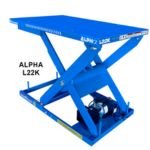
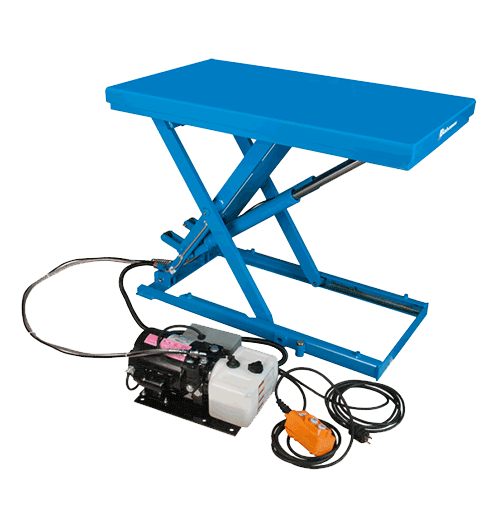
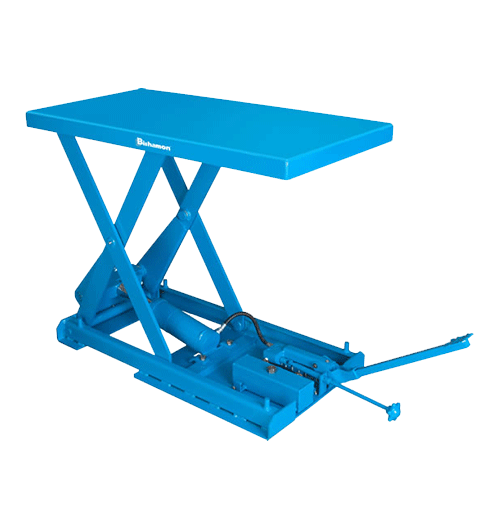
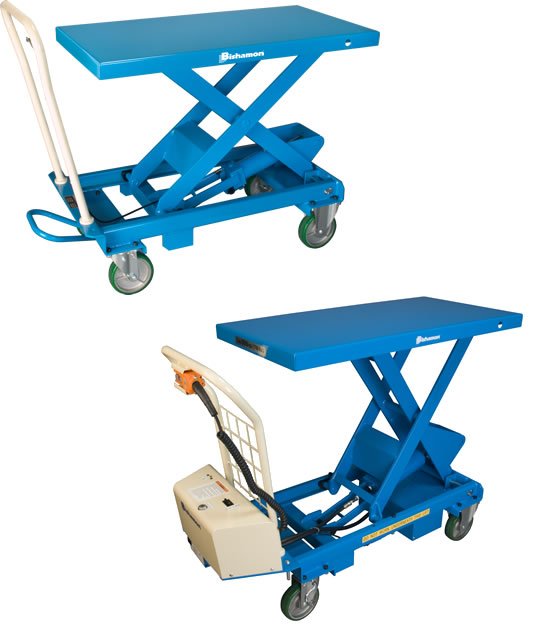
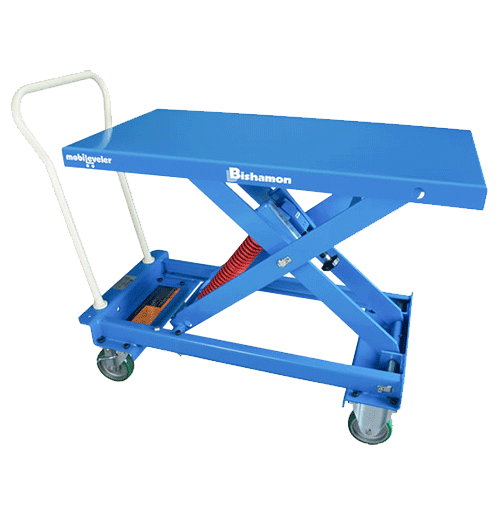
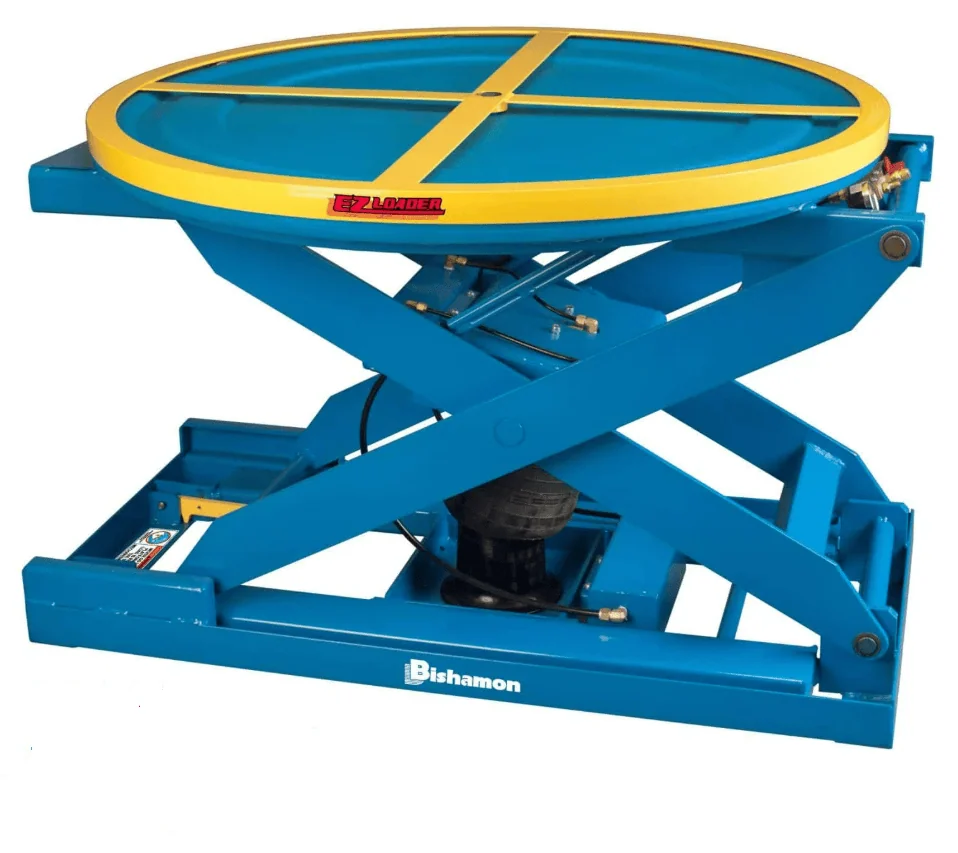
A hydraulic scissor lift table is a heavy-duty material handling solution that uses hydraulic power and a crisscross scissor mechanism to raise and lower a platform. As hydraulic pressure extends the lift cylinder, the scissor arms expand and elevate the platform vertically. When pressure is released in a controlled manner, the scissor arms retract and the platform lowers.
These tables are ideal for applications that require repeated lifting, lowering, loading, unloading, assembly, inspection, or work positioning. By bringing materials to the worker instead of forcing the worker to bend or reach, hydraulic scissor lift tables help reduce strain, improve ergonomics, and support safer daily operations.
How Does a Hydraulic Scissor Lift Table Function?
A hydraulic scissor lift table functions by using pressurized hydraulic fluid to move a cylinder that raises the scissor mechanism. When the operator activates the lift, hydraulic fluid is pumped into the cylinder, creating force that extends the scissor arms and raises the platform. To lower the table, the system releases hydraulic fluid in a controlled way, allowing the platform to descend smoothly.
Depending on the model, a hydraulic lift table may be operated by a foot pedal, hand control, push-button station, or other control system. This allows operators to make accurate height adjustments and position loads at the most comfortable and efficient working height.
Key Parts of a Hydraulic Scissor Lift Table
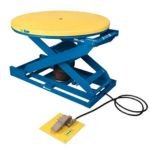
Common hydraulic scissor lift table components include the platform, scissor legs, hydraulic cylinder, pump, base frame, controls, and safety features. The platform supports the load, while the scissor mechanism provides vertical lifting movement. The hydraulic cylinder and pump generate the force needed to raise the table, and the base frame provides stability during operation.
Many industrial lift tables also include features such as safety bars, velocity fuses, toe guards, overload protection, and maintenance locks. These components help support safe operation, especially in demanding environments where heavy loads are lifted repeatedly throughout the day.
Best Industries for Hydraulic Scissor Lift Tables
Hydraulic scissor lift tables are useful across many industries where heavy materials need to be lifted, positioned, or accessed at ergonomic heights.
Manufacturing: Hydraulic lift tables are commonly used on assembly lines, production workstations, and machine feeding areas to position parts at the right height and reduce worker strain.
Warehousing and Logistics: Lift tables support loading, unloading, staging, sorting, and order fulfillment by making palletized or boxed materials easier to handle.
Automotive: Automotive facilities use lift tables to position parts, components, and assemblies for repair, inspection, or production tasks.
Retail and Distribution: Distribution teams use lift tables to manage inventory, prepare shipments, and reduce manual lifting during stock handling.
Healthcare and Laboratory: Lift tables can help safely position heavy equipment, supplies, and materials while reducing physical strain on staff.
Safety Features of Hydraulic Scissor Lift Tables
Safety features are an important part of hydraulic scissor lift table design. Overload protection helps prevent the table from being used beyond its rated capacity, while emergency stop controls allow quick response when needed. Non-slip platforms help keep materials stable, and safety locking mechanisms support maintenance when the lift is elevated.
Other common safety features may include toe guards, safety skirting, pressure relief valves, velocity fuses, and maintenance bars. Together, these features help reduce accident risk and support safer handling of heavy materials in industrial environments.
Benefits of Hydraulic Scissor Lift Tables for Businesses
Hydraulic scissor lift tables provide several important benefits for businesses that rely on frequent material movement and load positioning.
They improve efficiency by making lifting, loading, unloading, and assembly tasks faster and more controlled. They also enhance workplace safety by reducing manual lifting and helping workers maintain a more comfortable posture throughout the day.
Because hydraulic lift tables can be used across many applications, they offer strong versatility for manufacturing, warehousing, logistics, packaging, and maintenance operations. Their durable construction and high weight capacities also make them a reliable long-term investment for businesses focused on safety, productivity, and ergonomic improvement.
Standard Sizes and Weight Capacities for Hydraulic Scissor Lift Tables
Choosing the right size and weight capacity is essential for safe and effective material handling. Hydraulic scissor lift table platform sizes can vary widely, from compact models used for lighter tasks to larger industrial platforms designed for heavier loads and oversized materials.
Lift heights may range from lower ergonomic positioning heights to extended heights used for loading, assembly, or machine access. Weight capacities also vary by model, with light-duty options supporting smaller loads and heavy-duty hydraulic lift tables designed for thousands of pounds. When selecting a lift table, businesses should consider load weight, platform size, travel height, duty cycle, and the available space around the workstation.
How to Operate a Hydraulic Scissor Lift Table Safely
To operate a hydraulic scissor lift table safely, always confirm the load does not exceed the table’s rated capacity. Place the load evenly on the platform to prevent tipping or instability, and keep hands, feet, and loose items clear of moving parts while the table is raising or lowering.
Operators should use controls gradually, avoid sudden movements, and engage safety locks or maintenance supports when required. Regular inspections are also important. Check for hydraulic leaks, worn components, unusual movement, or damaged safety features, and always follow manufacturer guidelines for operation and maintenance.
How to Choose the Right Hydraulic Scissor Lift Table
To choose the right hydraulic scissor lift table, start by identifying the application. Consider what materials will be lifted, how often the table will be used, and whether the lift will support loading, assembly, packaging, maintenance, or general work positioning.
Important factors include weight capacity, platform dimensions, lift height, lowered height, power source, mobility needs, and available options such as tilt tops, turntables, portability, or custom platforms. For operations that need equipment to move throughout the facility, Bishamon also offers mobile lift tables designed for flexible ergonomic positioning.
Can Hydraulic Scissor Lift Tables Be Used Outdoors?
Hydraulic scissor lift tables may be used outdoors when they are designed with appropriate materials, finishes, and protection for the environment. Outdoor applications may require corrosion-resistant construction, weather-resistant components, or additional protection from moisture, dirt, and extreme temperatures.
Regular maintenance is especially important for outdoor or harsh-environment use. Keeping hydraulic components, moving parts, and safety features in good condition helps protect the equipment and extend service life.
Improve Ergonomic Material Handling With Bishamon Lift Tables
Bishamon hydraulic scissor lift tables are versatile, durable solutions for improving workplace productivity, safety, and efficiency. With the right size, capacity, and configuration, these lift tables help workers position materials more comfortably, reduce manual strain, and support smoother workflows across industrial environments.
Whether your operation needs a stationary hydraulic lift table, a mobile lift table, or a specialized ergonomic lifting solution, Bishamon offers equipment designed to support safer, more efficient material handling.