
Using a Pallet Jack on a Ramp: Safe Practices & Guidelines
Can You Use a Pallet Jack on a Ramp or Pallet Truck Slope?
A pallet jack can be used on a ramp in certain applications, but safe operation depends on the equipment, ramp angle, load weight, surface condition, operator control, and manufacturer guidelines. Moving a heavily loaded pallet truck across an incline creates very different handling conditions than transporting the same load across a flat warehouse floor.
A pallet jack ramp may be used to move palletized materials between different elevations, such as loading docks, trailers, warehouse platforms, production areas, and shipping zones. However, not every pallet jack is designed for incline travel, and not every ramp, dock plate, or portable loading surface is suitable for supporting pallet trucks.
Industrial pallet ramps are commonly constructed from steel or aluminum and may feature textured or non-slip surfaces to improve traction. Before use, the ramp should be properly positioned, secured against movement, and rated to support the combined weight of the pallet jack, pallet, and cargo.
Operators should never assume that a ramp is safe simply because the pallet truck physically fits on it. The pallet truck slope, equipment capacity, load stability, surface condition, available clearance, and ability to maintain control all need to be evaluated before moving a load.
Facilities that regularly transport palletized materials can explore Bishamon’s skid lifts and pallet trucks for dependable warehouse and industrial material handling solutions.
Can Pallet Trucks Be Used on Ramps?
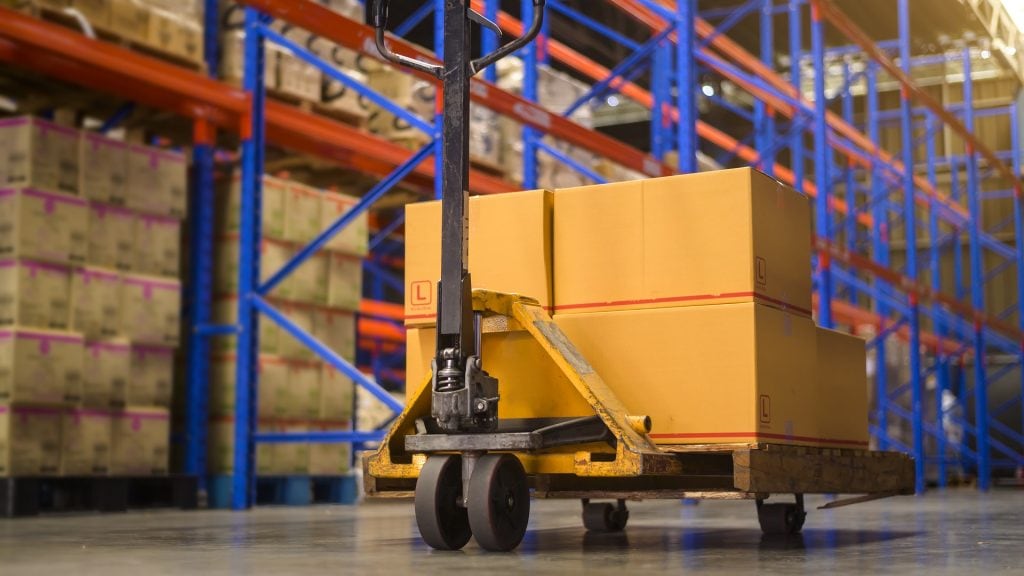
Pallet trucks may be used on ramps when the equipment manufacturer permits incline travel and the ramp is suitable for the load. Manual pallet jacks require the operator to physically control the equipment, making steep slopes, heavy loads, and slippery surfaces especially difficult to manage.
Before moving a pallet jack across an incline, confirm that:
- The pallet truck is approved for ramp use.
- The ramp is secured and rated for the total weight.
- The load is centered and stable.
- The surface is clean, dry, and free of damage.
- The operator has adequate visibility and control.
- The incline does not exceed the equipment manufacturer’s limits.
Operators should move slowly, avoid sudden stops or turns, and follow all facility safety procedures. Loads should never be moved on an incline when the pallet jack begins rolling uncontrollably or requires excessive force to operate.
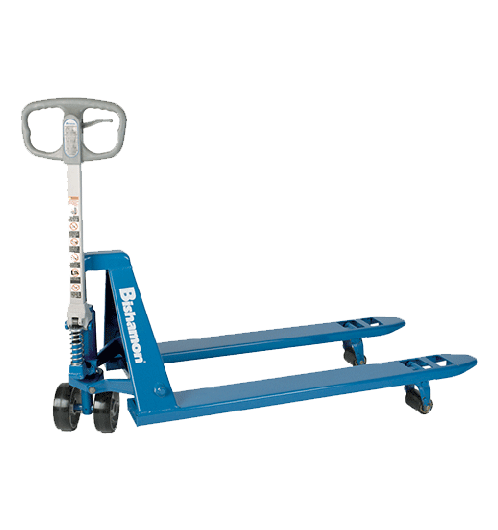
Bishamon’s Blue Label™ Hand Pallet Trucks provide durable floor-level pallet transport, but operators should always review the applicable product manual before using any manual pallet truck on a slope.
What Is the Maximum Pallet Jack Ramp Slope?
There is no universal maximum ramp slope that applies to every pallet jack. Acceptable incline limits depend on the equipment design, load capacity, braking system, ramp construction, and manufacturer instructions.
Manual pallet trucks generally require gradual inclines because the operator supplies the force needed to move and control the load. As the slope or load weight increases, the pallet jack becomes more difficult to push, pull, stop, and steer.
Powered pallet trucks may be designed for greater gradeability, but their allowable slope still varies by model and may change when the equipment is carrying a load. Operators should never estimate a safe incline based solely on whether the pallet truck can physically travel up or down the ramp.
Before use, verify the ramp angle, pallet jack operating limits, total load weight, and applicable workplace procedures.
What Should You Consider Before Using a Pallet Jack on a Ramp?
The complete handling environment should be evaluated before moving a pallet jack across an incline.
Ramp Capacity and Stability
The ramp must support the combined weight of the pallet truck, pallet, cargo, and operator when applicable. It should remain stable throughout use and be secured against slipping, shifting, or separating from the loading surface.
Ramp Width and Edge Protection
The usable ramp width should provide sufficient clearance for the pallet jack, load, and wheels. Curbs, raised edges, or other protective features may help prevent equipment from traveling off the side, depending on the ramp design.
Load Weight and Stability
Palletized materials should be centered, evenly distributed, and secured before movement. Tall, loose, damaged, or top-heavy loads are more likely to shift while traveling across a pallet truck slope.
Surface Traction
Wet, oily, icy, damaged, or debris-covered ramps can reduce traction and make the equipment difficult to control. Inspect the ramp, pallet jack wheels, forks, and surrounding travel path before beginning the task.
Operator Position and Visibility
Operators should follow the pallet jack manufacturer’s instructions for travel direction and positioning on inclines. The load should never obstruct visibility or place the operator in a position where rolling equipment could trap or strike them.
For help matching equipment capacity to the load, review Bishamon’s guide explaining how much weight a pallet jack can lift.
Can You Purchase Pallet Truck Ramps?
Pallet truck ramps are available from industrial equipment manufacturers and material handling suppliers. They may be used for loading docks, delivery vehicles, warehouse platforms, containers, and other elevation changes where palletized goods must be transferred.
Available options include portable aluminum ramps, heavy-duty steel ramps, dock boards, yard ramps, and permanent warehouse ramp systems. The correct design depends on the equipment type, load weight, elevation change, frequency of use, and facility layout.
When comparing ramps for pallet jack use, consider:
Weight Capacity: Confirm that the ramp can support the pallet truck, pallet, and maximum cargo weight.
Ramp Length and Incline: A longer ramp generally creates a more gradual transition, but the final slope must still comply with equipment and facility requirements.
Usable Width: The ramp should provide sufficient clearance for the pallet jack and widest anticipated load.
Surface Grip: Textured or non-slip surfaces can improve traction during loading and unloading.
Ramp Placement: The ramp should connect securely to the dock, trailer, platform, or floor without creating gaps or abrupt transitions.
Equipment Compatibility: Verify that the ramp is specifically suitable for pallet trucks rather than assuming that any portable ramp or dock plate can support concentrated wheel loads.
When Should You Avoid Using a Pallet Jack on a Ramp?
Do not use a pallet jack on a ramp when the equipment or ramp is not rated for the application. Ramp travel should also be avoided when:
- The incline exceeds the manufacturer’s approved limit.
- The ramp shifts, flexes, or lacks secure placement.
- The pallet jack cannot be controlled comfortably.
- The load is unstable, damaged, or improperly secured.
- The surface is wet, slippery, uneven, or obstructed.
- The combined weight exceeds the equipment or ramp capacity.
- The wheels may catch in gaps or abrupt transitions.
- Pedestrian traffic cannot be safely controlled.
- The operator lacks the required training.
Frequent ramp use, long inclines, or heavy loads may call for powered equipment or a different material handling system. The right solution should be based on the specific facility, workflow, and load rather than convenience alone.
Bishamon’s guide on choosing the right pallet jack for your warehouse provides additional selection considerations.
Pallet Jack Ramps vs. Lift Tables
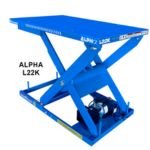
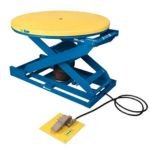
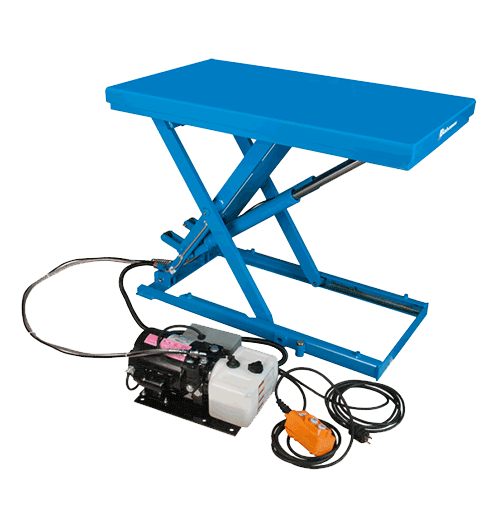
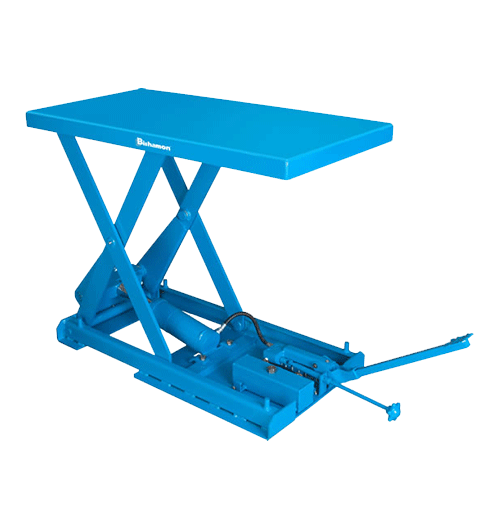
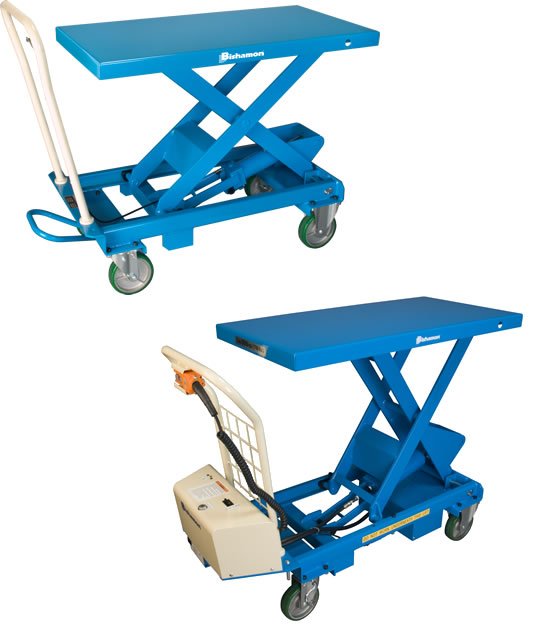
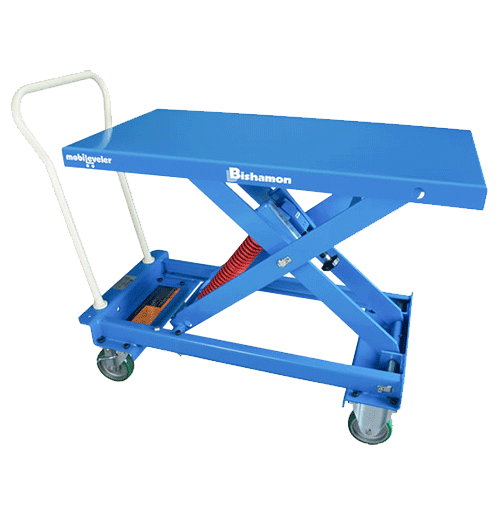
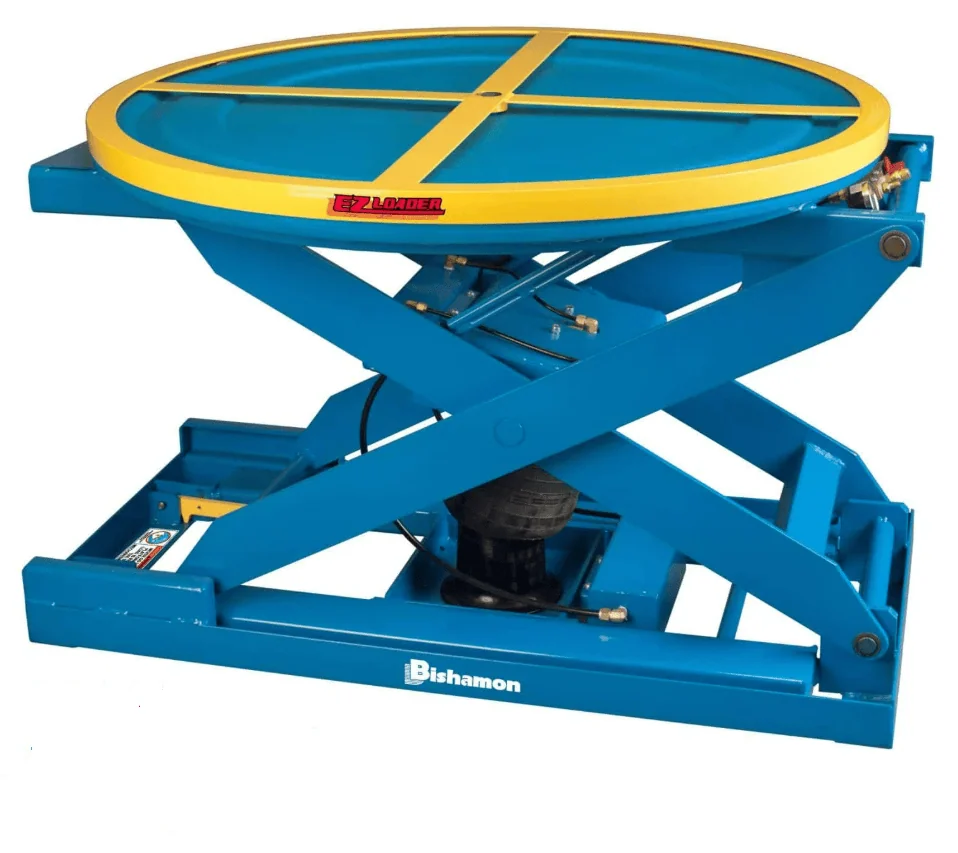
A pallet truck ramp creates a sloped path between two elevations, while a lift table raises or lowers the load vertically. For repetitive material transfer between fixed heights, a lift table may provide a more controlled alternative by eliminating the need to manually move a heavy pallet across an incline.
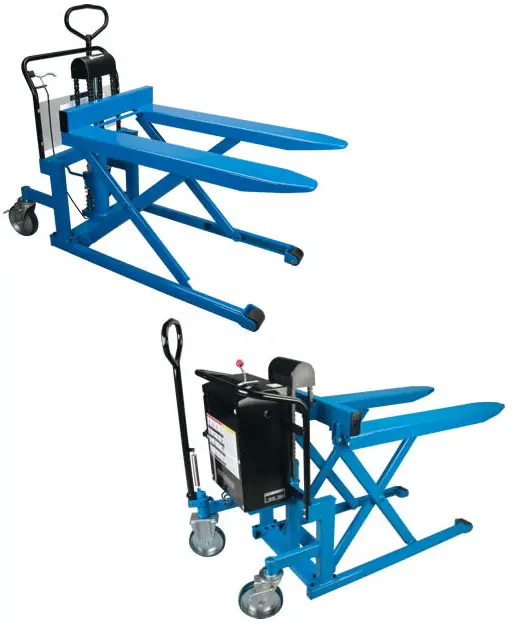
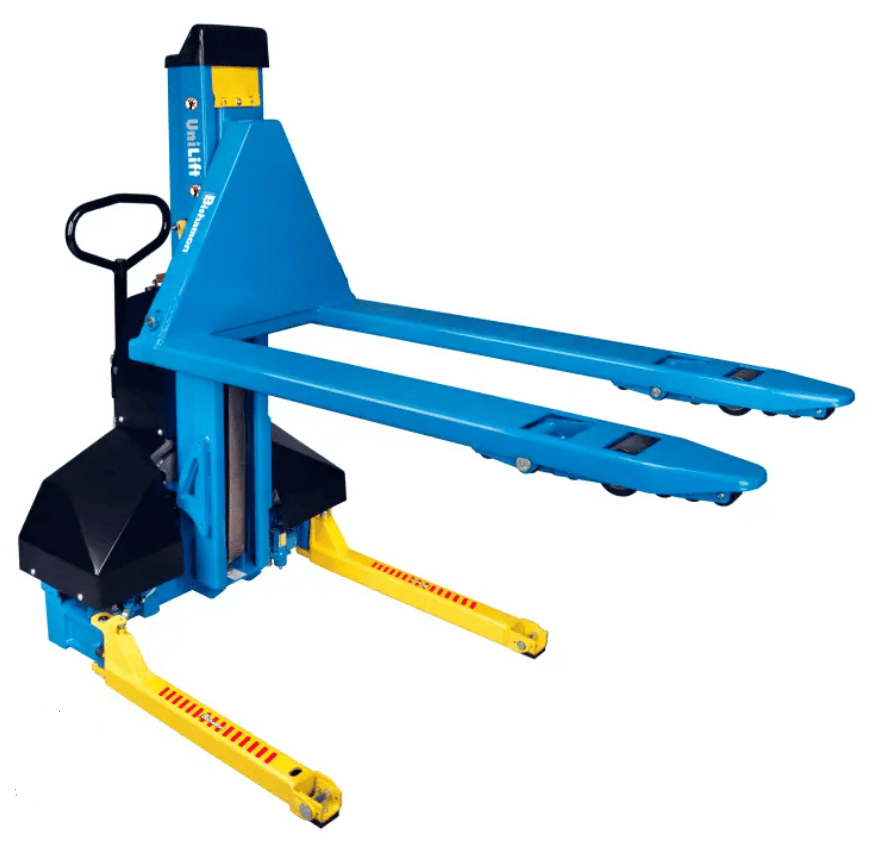
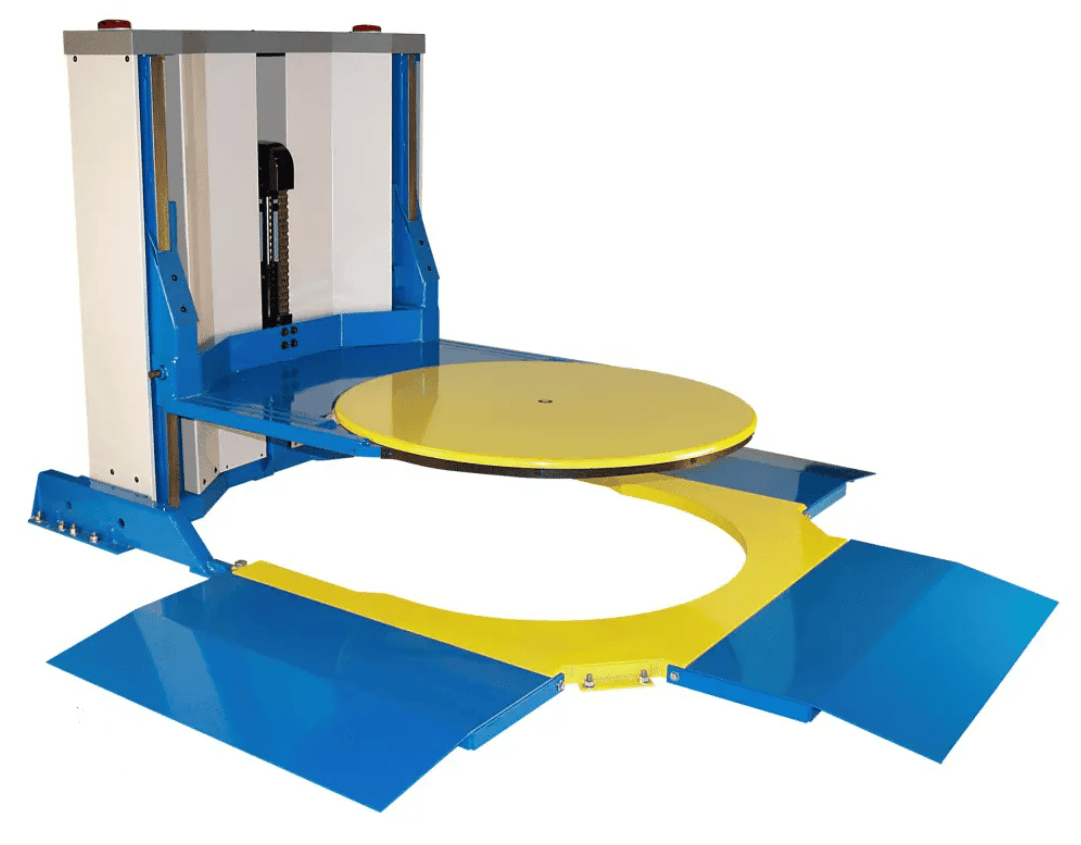
Bishamon’s industrial lift tables are available in multiple capacities, platform sizes, and configurations for loading, positioning, assembly, and material staging. Facilities that need to raise pallets to an ergonomic working height can also explore Scissor Lift Pallet Jacks and pallet positioners.
Explore Bishamon Pallet Handling Equipment
Bishamon offers durable pallet handling equipment designed to improve load control, workplace ergonomics, and material movement throughout warehouses, manufacturing facilities, shipping departments, and distribution centers.
The Blue Label™ Hand Pallet Truck Series supports reliable floor-level pallet transport, while Bishamon’s Scissor Lift Pallet Jacks combine pallet movement with elevated load positioning. Facilities that need to raise and access materials at a workstation can also compare Bishamon’s pallet positioners and complete selection of industrial lift tables.
Selecting properly rated equipment for the ramp, load, and operating environment helps teams move palletized materials more efficiently while maintaining better control throughout the handling process.
Related Posts